| Wikipedia Reference Desk – All recent questions | |||||||||||||||||||||||||||||||||||||||||
This page lists all the recent questions asked on the Wikipedia reference desk by category. To ask a new question, please select one of the categories below. To answer a question, click on the "edit" link beside the question. For information on any topic, choose a category for your question: | |||||||||||||||||||||||||||||||||||||||||
See also the Wikipedia department directory
| |||||||||||||||||||||||||||||||||||||||||
The following images are being used under the GNU FDL and/or the CC-BY-SA license:
P computing.svg, P physics.svg, P mathematics.svg, P question.svg, P art.png, P literature.svg, P music.svg, P archive.svg, P Airplane.png | |||||||||||||||||||||||||||||||||||||||||


Computing
[edit]January 15
[edit]Wikipedia Chatbot
[edit]Is there a free chatbot using only Wikipedia as source material? ~2026-29536 (talk) 14:25, 15 January 2026 (UTC)
- No. And I doubt it would work. LLMs need very large amounts of training data just to 'learn' to compose comprehensible sentences etc. AndyTheGrump (talk) 14:29, 15 January 2026 (UTC)
- Many chatbot projects use local documents exclusively, such as chatbots used to answer questions about corporate documentation. ~2026-29536 (talk) 16:49, 15 January 2026 (UTC)
- Anyone can train one with Wikipedia's CC-BY materials if they wish to, (not that LLM training is a highly copyright-aware process anyways...) but Wikipedia is probably not doing this itself.
- Because even if we assume everything on WP is factually correct (I wish!), the model is still going to hallucinate. 海盐沙冰 / aka irisChronomia / Talk 16:56, 15 January 2026 (UTC)
- I think there is a confusion about the question. It is very common to use a pre-trained LLM to make a chatbot that uses only a limited source material for answering questions. For example, a company can make a chatbot, pretrained on whatever it was trained on, to answer questions limited solely to HR documentation. There are multiple methods of doing so, such as LLM+RAG. The question is not asking "Has anyone trained an LLM on Wikipedia?" It is asking "Has anyone made a free chatbot that only uses Wikipedia for the source material when answering prompts?" ~2026-29536 (talk) 17:24, 15 January 2026 (UTC)
- I see. Sorry for the confusion, I'll keep the question in mind. But I haven't see such a chatbot yet.
- If we're trying to limit an LLM's response to be sourced from WP, can we solve that simply by doing prompt engineering? 海盐沙冰 / aka irisChronomia / Talk 02:17, 16 January 2026 (UTC)
- You can ask LLMs to back up their statements by citing sources, and some will comply (or even do so without you asking), so I bet (I haven't tried) that you can ask for the cited sources to be confined to Wikipedia articles. You still have to check, though, whether the cited sources actually exist and support the statements; my experience is that this is not at all guaranteed. ‑‑Lambiam 10:16, 16 January 2026 (UTC)
- I've tried a few different forms of prompts on ChatGPT. It has worked OK to apparently limit the content it returns, but I haven't got it to give good links to the Wikipedia articles. I was hoping for a tool to search Wikipedia that is better than the very poor built-in search bar. The search bar requires you to already know what you are looking for. If you don't know, you can't use the search bar for something like: "The article about the person who was in a movie about time travel, but she was a psychiatrist, and she didn't think it was time travel until later in the movie." ChatGPT said it was Madeleine Stowe, but didn't link to the article. Wikipedia's search jumps to Oppenheimer. Update: I realized it was giving me a link to the 12 Monkeys article in faint gray on white background. Not the article requested, but close enough to find the article requested and still far better than Wikiepdia's search. ~2026-29536 (talk) 11:57, 16 January 2026 (UTC)
- For Google or DuckDuckGo: just search as normal and use "site:wikipedia.org"
- For ChatGPT:
- Don't use the "Search" feature, instead, turn "Thinking" on and ask it to search.
- (When you use the Search buttons on the interface, it switches to a smaller/older model when interpreting the results and will only try to search once, I've found it pretty bad compared to using Thinking)
- Update your personalization settings or memory so that it includes statements such as:
When citing online sources, ChatGPT will ensure what ChatGPT says actually reflects those sources. Do *not ever* cite sources without having searched for them.
- Update your personalization settings or memory so that it includes statements such as:
- (For memory, you can't update that in the settings directly, but you can tell it to 'use the bio tool to remember' statements and preferences).
- If you want to limit sources, ask it to "for this conversation" prefer a certain source, e.g. "for this conversation, when searching online, I want you to only cite Wikipedia as a source and no others". It should be fairly okay at obeying this constraint if you use GPT-5 (or higher) with reasoning turned on.
- Remember that it's an LLM and you'll want to verify the sources anyway.
- Limiting search to Wikipedia is not something I tend to do personally, but if I were you, I would not limit searching to Wikipedia, but would try to limit citations to Wikipedia. That way, during its reasoning phase, it will be free to gather context from other sources before returning to looking for Wikipedia-based sources to cite. (You can also tell it to explicitly do that, and it should be okay). For example:
Tell me about [X]. Back it up with sources from Wikipedia only - but before you give me the final answer, you're free to search elsewhere too for extra context.Komonzia (talk) 17:17, 17 January 2026 (UTC)
- I've tried a few different forms of prompts on ChatGPT. It has worked OK to apparently limit the content it returns, but I haven't got it to give good links to the Wikipedia articles. I was hoping for a tool to search Wikipedia that is better than the very poor built-in search bar. The search bar requires you to already know what you are looking for. If you don't know, you can't use the search bar for something like: "The article about the person who was in a movie about time travel, but she was a psychiatrist, and she didn't think it was time travel until later in the movie." ChatGPT said it was Madeleine Stowe, but didn't link to the article. Wikipedia's search jumps to Oppenheimer. Update: I realized it was giving me a link to the 12 Monkeys article in faint gray on white background. Not the article requested, but close enough to find the article requested and still far better than Wikiepdia's search. ~2026-29536 (talk) 11:57, 16 January 2026 (UTC)
- You can ask LLMs to back up their statements by citing sources, and some will comply (or even do so without you asking), so I bet (I haven't tried) that you can ask for the cited sources to be confined to Wikipedia articles. You still have to check, though, whether the cited sources actually exist and support the statements; my experience is that this is not at all guaranteed. ‑‑Lambiam 10:16, 16 January 2026 (UTC)
- I think there is a confusion about the question. It is very common to use a pre-trained LLM to make a chatbot that uses only a limited source material for answering questions. For example, a company can make a chatbot, pretrained on whatever it was trained on, to answer questions limited solely to HR documentation. There are multiple methods of doing so, such as LLM+RAG. The question is not asking "Has anyone trained an LLM on Wikipedia?" It is asking "Has anyone made a free chatbot that only uses Wikipedia for the source material when answering prompts?" ~2026-29536 (talk) 17:24, 15 January 2026 (UTC)
- Many chatbot projects use local documents exclusively, such as chatbots used to answer questions about corporate documentation. ~2026-29536 (talk) 16:49, 15 January 2026 (UTC)
Kidsinmind
[edit]Hallo. Good late afternoon. Does anyone here know about kidsinmind.com? They are the OG parental guide for movies since '92. Sure, something like them probably existed, but not online. Even earlier than IMDB's parent guides. I personally think the site is a very good idea because every kid is different. Also, some of their reviews are unintentionally hilarious. My question is were they really online since 1992? Wayback machine has nothing before 2000. ~2026-24671-3 (talk) 16:05, 15 January 2026 (UTC)
- I tried with the (Google) search term
"kids-in-mind" before:1998-12-31 after:1989-01-01and a litany of others (e.g., +.com, remove dashes, etc.) and can't find website mentioning it. - It might exist somewhere else on the net, but at least I can't find any traces. I'm thinking about searching for it in Usenet archives example link. iris 0:24a, edited 0:29a 海盐沙冰 / aka irisChronomia / Talk 16:24, 15 January 2026 (UTC)
- I believe it's probably on the Internet some time around or after 1999. Check this query to Google Group's usenet archive: [1]. 海盐沙冰 / aka irisChronomia / Talk 16:38, 15 January 2026 (UTC)
- I forgot the most obvious part: An ICANN whois lookup. [2] [3], and quote:
Created: 1998-09-04海盐沙冰 / aka irisChronomia / Talk 16:44, 15 January 2026 (UTC)- Sorry for the reply. So does it mean it was on AOL first? ~2026-24671-3 (talk) 23:23, 18 January 2026 (UTC)
- This I'll have no idea. Maybe there's some way to search historical archives of AOL, but I don't know of any. 海盐沙冰 / aka irisChronomia / Talk 11:50, 19 January 2026 (UTC)
- Sorry for the reply. So does it mean it was on AOL first? ~2026-24671-3 (talk) 23:23, 18 January 2026 (UTC)
January 16
[edit]Boolean Algebra
[edit]Explain the science of half adders and binary multipliers in a way such that it may have seemed to us that we could have discovered it ourselves ~2026-34329-6 (talk) 14:20, 16 January 2026 (UTC)
- Imagine you work on binary addition on your own. You are using one bit. If you add 0+0, you get 0. If you add 0+1, you get 1. If you add 1+0, you get 1. If you add 1+1, you get 10, but you are only using one bit. You actually have 0 with a carry of 1 - just like carrying the 10s digit when adding decimal numbers. So, you decide to separate the value and the carry digits. 0+0 is carry 0 and value 0. 0+1 is carry 0 and value 1. 1+0 is carry 0 and value 1. 1+1 is carry 1 and value 0. If you look closely, you can see that the value is an XOR function. If one (and only one) of the values is 1, value is 1. Carry is an AND function. If both are 1, carry is 1. So, you don't try to program or engineer A+B in binary. You program Value=A XOR B and Carry = A AND B. That's a half adder. ~2026-29536 (talk) 14:30, 16 January 2026 (UTC)
- Some links: Half adder; AND gate; XOR; XOR gate. While this is commonly viewed as an application of Boolean algebra, the subject of Shannon's master's thesis A Symbolic Analysis of Relay and Switching Circuits, you don't actually need to understand more than the rules of binary addition and very basic digital logic to design a half adder. ‑‑Lambiam 15:18, 16 January 2026 (UTC)
- Or you could try New Math - Tom Lehrer as an introduction before going to the math of 0's and 1's 😀 NadVolum (talk) 10:26, 19 January 2026 (UTC)
January 19
[edit]Amazon AI
[edit]Good morning. Has anyone noticed that Amazon has more and more AI products, like books? ~2026-24671-3 (talk) 05:40, 19 January 2026 (UTC)
- Well you seem to have noticed. That is hardly surprising, as AI is the cool tech at the moment, despite its massive shortcomings. Shantavira|feed me 09:09, 19 January 2026 (UTC)
- I'm sorry if you've been caught out by one of those scams. I guess in the future they'll start getting good enough to fool people or some will actually like them like much of the music now coming out. And they'll write the reviews too. After Facebook then Twitter and X and TikToc and Instagram etc etc then AI on Microsoft and search engines all turning peoples brains to mush where do you expect the world to end up? NadVolum (talk) 10:08, 19 January 2026 (UTC)
- It seems everyone is getting AI, even the Wikimedia Foundation has a Lead Product Manager, AI.
- Commander Keane (talk) 12:36, 19 January 2026 (UTC)
- Yep, AI-generated books, but also product descriptions, the same product rehashed hundreds of times with different branding, etc. The latter has been going on for much longer than LLMs have been around though. https://www.youtube.com/watch?v=4UrqlMfwUC4
- If you care about basically anything at all, you should at least think about trying other places first before you look on Amazon (just search "don't books from Amazon" online, I'll avoid naming a specific outlet here). Komonzia (talk) 14:10, 19 January 2026 (UTC)
- You might like the article Dead Internet theory. Um, that's like a recommender which gets you engaged by getting angrier ;-) NadVolum (talk) 15:12, 19 January 2026 (UTC)
- Don't believe everything you see on the Web; like so many conspiracy theories, this dead Internet theory is mainly being spread by bots. ‑‑Lambiam 21:15, 19 January 2026 (UTC)
January 20
[edit]Can they be removed?
[edit]Good late afternoon. It's me yet again. I might be annoying, but i hope not. My question is if it's possible to not see those small rectangles (hope that's the right shape) with search queries (Discover More)? They're annoying. ~2026-24671-3 (talk) 17:00, 20 January 2026 (UTC)
- When and where do you see these? ‑‑Lambiam 18:51, 20 January 2026 (UTC)
- @~2026-24671-3 Wikipedia doesn't have that feature by default, so maybe it's an addon or browser extension you've installed? Or that was installed "for you" when you installed something else on your PC?
- Troubleshoot a little: Try to access the same site from a different web browser (or ideally a different device), if you don't see it, it's just the original browser/device affected. Komonzia (talk) 20:11, 20 January 2026 (UTC)
- Not on Wikipedia, on other sites. Go a site that has ads and see if you see them. ~2026-24671-3 (talk) 20:27, 20 January 2026 (UTC)
- I've never seen this. Are they embedded in the ads? Then use an ad blocker. ‑‑Lambiam 21:53, 20 January 2026 (UTC)
- @~2026-24671-3 Do they look a bit like these?
- YouTube: https://www.reddit.com/r/youtube/comments/1g2n6k9/youtube_blue_magnifying_glass_comments/
- Reddit itself: https://www.reddit.com/r/reddithelp/comments/1mum1wx/what_are_the_random_magnifying_glass_links_i_see/
- Facebook: https://www.reddit.com/r/facebook/comments/1hjyrr7/what_does_the_blue_magnifying_glass_alongside/
- If so, it's a feature of each website. Some sites are trialling it, it seems. Ad blockers likely have a way to block this kind of thing, but I'm not sure personally. Komonzia (talk) 13:28, 21 January 2026 (UTC)
- No, not those. Go on a site without Adblock and see if they appear. ~2026-24671-3 (talk) 13:57, 22 January 2026 (UTC)
- Can you attach a picture? thetechie@enwiki:~$ she/they | talk 17:25, 22 January 2026 (UTC)
- Could you turn off Adblock, go on a site like FanFiction net, search for something there and see if they appear? Please. ~2026-24671-3 (talk) 17:46, 22 January 2026 (UTC)
- @~2026-24671-3 I went there, searched for something, then turned off uBlock Origin, and from the page's source code it's very clear that there's an
<ins>tag being inserted with an 'id' ofadsbygoogle-- so it's almost definitely a new way of Google Ads putting ads in the page. It matches the developer documentation here which to me (because it mentions GDPR) means they might only be doing this in particular regions (based on local privacy laws). - You block it by using an ad blocker, if you don't want to see those. Komonzia (talk) 01:25, 24 January 2026 (UTC)
- Just to be sure, did you see those small shapes with words in them? There are often many of them in a row. ~2026-24671-3 (talk) 14:41, 24 January 2026 (UTC)
- Pretty much what you're describing https://ibb.co/qFjcD9XY
- That's in Firefox - when I open it in Chrome (where I have fewer extensions), there's also more in the middle of the page.
- Again, if you have an issue with them, best to contact the website or configure your ad blocker differently.
- uBlock Origin should already block it, but it's customisable so you can block specific parts of the page you don't like if you wanted to:
- quick demo: https://www.youtube.com/watch?v=8TvCGWwQr5o
- full guide: https://github.com/gorhill/ublock/wiki/Element-picker
- Komonzia (talk) 14:53, 24 January 2026 (UTC)
- Thanks. Do you know exactly what question they have? Also, props for it being a Hey Arnold fic! ~2026-24671-3 (talk) 21:07, 24 January 2026 (UTC)
- Just to be sure, did you see those small shapes with words in them? There are often many of them in a row. ~2026-24671-3 (talk) 14:41, 24 January 2026 (UTC)
- @~2026-24671-3 I went there, searched for something, then turned off uBlock Origin, and from the page's source code it's very clear that there's an
- Could you turn off Adblock, go on a site like FanFiction net, search for something there and see if they appear? Please. ~2026-24671-3 (talk) 17:46, 22 January 2026 (UTC)
- I use the Internet quite a lot and most sites don't have it, for me. So it's either a you problem or a site-specific problem. :) Komonzia (talk) 01:15, 24 January 2026 (UTC)
- Can you attach a picture? thetechie@enwiki:~$ she/they | talk 17:25, 22 January 2026 (UTC)
- Can confirm that adblock does not block the "feature". thetechie@enwiki:~$ she/they | talk 17:26, 22 January 2026 (UTC)
- No, not those. Go on a site without Adblock and see if they appear. ~2026-24671-3 (talk) 13:57, 22 January 2026 (UTC)
- Not on Wikipedia, on other sites. Go a site that has ads and see if you see them. ~2026-24671-3 (talk) 20:27, 20 January 2026 (UTC)
Egyptian hieroglyphs not displaying properly on Wikipedia pages
[edit]I have just noticed that there are quotes in Egyptian hieroglyphics in some Wikipedia articles (e.g. here, after the words 'is depicted standing on a lion on a plaque where she is given the triple name of Qetesh-ʿAstart-ʿAnat'), except that half the hieroglyphs aren't displayed properly in my browser and empty squares appear instead. Does anyone have any idea why that would be the case and how I could fix it? I'm using an up-to-date version of Chrome (and I get the same result in Microsoft Edge), I have Segoe UI Historic, and I have even installed Noto Sans Egyptian Hieroglyphs. ~2026-41408-0 (talk) 23:24, 20 January 2026 (UTC)
- Look at this diff. It appears that the hieroglyphs that don't render were added between the original hieroglyphs. I'm not sure what's going on here. user:Temerarius, user:Antiquistik, what does it all mean? Oh, codepoints.net tells me that the offending glyph is "Egyptian Hieroglyph Vertical Joiner", a non-printing character for positioning on hieroglyph above another. Looking at Template:Script/Egyptian_Hieroglyphs, perhaps you need Egyptian OpenType, eot.ttf, which is linked to there under "Egyptian Text"? Card Zero (talk) 23:46, 20 January 2026 (UTC)
- The page and the question are certainly in my wheelhouse, is that why you're asking me? I don't recall being involved in the edits. I see empty squares too. It'd be nice if the joiner worked!
- Temerarius (talk) 00:42, 21 January 2026 (UTC)
- For what it's worth, it seems to display correctly for me. I'm using Firefox with no special (hieroglyph-related or otherwise) fonts installed. Matt Deres (talk) 03:48, 21 January 2026 (UTC)
- Me too, on Arch Linux and Zen Browser (a Firefox fork). I wonder if this is a lack of Unicode/rendering compatibility in Windows, as they mentioned Segoe is installed. thetechie@enwiki:~$ she/they | talk 05:23, 21 January 2026 (UTC)
- I'm on an Android tablet at the moment and the joiner chars aren't working. Card Zero (talk) 05:58, 21 January 2026 (UTC)
- @Card Zero Are you on Chrome? I wonder if it's a bug with non-Linux, as Linux, in my experience, sometimes contains fonts/keyboard layouts, etc. preinstalled that other OS's don't have. I wonder if it's because I installed KDE Plasma so I have Noto fonts. thetechie@enwiki:~$ she/they | talk 15:50, 23 January 2026 (UTC)
- For clarification, Noto is the default font on that environment and it installs a bunch of Noto fonts if you preinstall KDE Plasma on a Linux distro. thetechie@enwiki:~$ she/they | talk 01:21, 24 January 2026 (UTC)
- @Card Zero Are you on Chrome? I wonder if it's a bug with non-Linux, as Linux, in my experience, sometimes contains fonts/keyboard layouts, etc. preinstalled that other OS's don't have. I wonder if it's because I installed KDE Plasma so I have Noto fonts. thetechie@enwiki:~$ she/they | talk 15:50, 23 January 2026 (UTC)
- I'm on an Android tablet at the moment and the joiner chars aren't working. Card Zero (talk) 05:58, 21 January 2026 (UTC)
- Me too, on Arch Linux and Zen Browser (a Firefox fork). I wonder if this is a lack of Unicode/rendering compatibility in Windows, as they mentioned Segoe is installed. thetechie@enwiki:~$ she/they | talk 05:23, 21 January 2026 (UTC)
- @~2026-41408-0 I wondering if this is a rendering thing with Windows. this page says to install Noto Sans Cuneiform or a similar font instead? Maybe try installing the Noto one?
- (If you really want to, you could install all of the Noto fonts, but I don't think there's any easy way to do it on Windows (you can use a package manager on Linux)). thetechie@enwiki:~$ she/they | talk 05:26, 21 January 2026 (UTC)
- I reckon it must require The Egyptian OpenType font, distributed by Microsoft on github here. "Renders Egyptian Hieroglyph Format Controls", says our template page. Card Zero (talk) 06:00, 21 January 2026 (UTC)
Installing the Egyptian OpenType font worked. Thanks to everyone and especially to Card_Zero! It's a pity that most people will have the same problem when reading such pages and probably won't find the solution.--~2026-41408-0 (talk) 06:42, 21 January 2026 (UTC)
- Is there a Wikipedia page where you looked for advice first, before the ref desk? Maybe that page needs this info adding. Card Zero (talk) 08:40, 21 January 2026 (UTC)
January 28
[edit]Science
[edit]January 14
[edit]Our excellent article could be improved with information on vulnerabilities and strategies to combat relay theft of up-market automobiles. Not something that concerns this old bike rider, but it seems to be a rising problem. Some scary (to push-button start vehicle owners) documentaries on Australia's ABC and SBS TV networks. Doug butler (talk) 12:33, 14 January 2026 (UTC)
- We have an article on relay attacks. What is the link with on-board diagnostics? ‑‑Lambiam 15:03, 14 January 2026 (UTC)
- Thank you for the link. Apparently similar attacks are made on motor vehicles. The article, for which I failed to find a link, mentioned vehicles such as Toyota LandCruisers being stolen and shipped in containers to countries that also drive on the left side of the road. Africa was mentioned.
- The article mentioned tools available on the internet by which a car with pushbutton start can be opened electronically and then started (presumably by physical connection to the OBD socket but that fact wasn't mentioned). The article then morphed into relay attacks, which from the wikilink you supplied, is a quite different technique used by people with similar aims and morals.
- I since found that one counter to relay attacks is a "sleeping battery" or "sleeping fob battery" replacement for the button battery in the owner's smart key, which activates with physical movement, then after maybe three minutes disconnects. Doug butler (talk) 19:26, 14 January 2026 (UTC)
- This may be the scary article you read. The attack schematically depicted in our Relay attack article will still work with a sleeping fob awakened by motion. What will (literally) foil the attack is keeping the key in a pocket or bag lined with a conductive material, like a wire mesh or tinfoil, creating a Faraday shield. ‑‑Lambiam 21:28, 14 January 2026 (UTC)
- The very first news article on Australia's channel 9 about the discovery of these stolen Landcruisers said something along the lines of "The criminals drilled into the vehicles and connected to the wiring system". This was never repeated in later bulletins. Is it possible to start these particular models by connecting to the OBD socket maybe?~2026-34591-5 (talk) 01:38, 17 January 2026 (UTC)
Water treatment and phosphorus
[edit]Doesn't modern water treament (example: [4]) remove phosphorus from sewage? If so why is phosphorus still banned for detergents for consumers? I have a reference question (talk) 16:47, 14 January 2026 (UTC)
- The article phosphates in detergent has lots of references. Not all waste water is treated in modern equipment and many countries have found it simpler to ban these materials as other detergents are available. Mike Turnbull (talk) 17:25, 14 January 2026 (UTC)
- Plus waste water that escapes treatment during storm surges (a hot topic in the UK now). Alansplodge (talk) 17:30, 14 January 2026 (UTC)
Centripetal acceleration in cyclotron/synchrotron
[edit]Particle accelerator descriptions often say the energy of the accelerated particles, i.e. basically how fast they are made to move. But of course they also undergo centripetal acceleration a as they go around the circular chamber. a depends on the radius as well as the particle energy, and that's not always so easy to find.
Does anyone know if any data is available for the highest a's available? Per the principle of equivalence (PE), this a can't be distinguished from a high gravity field. So is a potentially high enough to be interesting for studying quantum behaviour in high gravity? Does that amount to the combination of QM and GR? Since PE is a (classical) GR thing, could it be that it breaks down enough for this approach to not really work?
This is related to my earlier question about entanglement across time. Thanks. ~2026-30246-1 (talk) 20:45, 14 January 2026 (UTC)
- If you know the maximal frequency and the radius of a cyclotron, the maximal magnitude centripetal acceleration equals
- I don't readily see which aspect of quantum theory might be impacted by a very high acceleration. It seems to me that it will be very difficult to observe quantum properties experimentally while the system being observed is circling millions of cycles per second in a cyclotron. ‑‑Lambiam 22:52, 15 January 2026 (UTC)
- But I don't know the frequency, and even if I did, that's for just one cyclotron. Now I'm trying to remember why I wanted the high gravity. The original question was about spinning half of an entangled pair in the cyclotron while holding the other half in an ion trap, then recovering the spinning part and doing a Bell experiment where the particles now had differing "ages" due to relativistic time dilation. ~2026-30246-1 (talk) 23:05, 15 January 2026 (UTC)
- Possible figures for the MSU K500: f = 21.5 MHz and r = 0.66 m, resulting in a ≈ 12×1015 m/s2. For the speed, we'd then have v/c ≈ 0.3, giving a Lorentz factor γ ≈ 1.05 . ‑‑Lambiam 08:28, 16 January 2026 (UTC)
- But I don't know the frequency, and even if I did, that's for just one cyclotron. Now I'm trying to remember why I wanted the high gravity. The original question was about spinning half of an entangled pair in the cyclotron while holding the other half in an ion trap, then recovering the spinning part and doing a Bell experiment where the particles now had differing "ages" due to relativistic time dilation. ~2026-30246-1 (talk) 23:05, 15 January 2026 (UTC)


January 17
[edit]Separating frozen burgers?
[edit]is there actually a way to do this without thawing the entire stack of burger patties out? A knife between them doesn't work and putting a cleaver between them and hitting it with a hammer doesn't separate them either. ~2026-35003-7 (talk) 00:27, 17 January 2026 (UTC)
- Yes, by separating them before you freeze them in the first place, and preventing their freezing together by sliding a bit of plastic wrap or parchment paper between them. -- Avocado (talk) 03:48, 17 January 2026 (UTC)
- You can also use a tool that is common for butchers: a bone saw like the one displayed here. Sawing frozen meat is AFAIK actually quite common, also when processing fish fillets frozen in blocks for instance, as a processing step to fish fingers. Regards, Grand-Duc (talk) 04:42, 17 January 2026 (UTC)
- Put pieces of greaseproof paper between them before freezing. Alternatively heat the knife before cutting them apart, either in boiling water or over a flame. Shantavira|feed me 09:21, 17 January 2026 (UTC)
- Would a bolster (as in the brick chisel) and hammer work? Iapetus (talk) 09:54, 19 January 2026 (UTC)
- Jewish space lasers, but only for kosher burgers. Clarityfiend (talk) 16:20, 20 January 2026 (UTC)
- I'm wondering how you would put those thin separators in once they've been frozen? ←Baseball Bugs What's up, Doc? carrots→ 20:06, 20 January 2026 (UTC)
- A bone saw will produce saw "dust", the quantity depending on the width of the blade, waste meat which could be sprinkled on the burger before grilling so not really waste. But in my experience, heating a knife in boiling water works just fine, possibly having to reheat it depending on the length of the parts to be separated. This is akin to spreading frozen butter portions on scones, dipping the knife into one's tea works wonders. — Preceding unsigned comment added by ~2025-30900-60 (talk) 17:30, 24 January 2026 (UTC)
Percentage of explained variation
[edit]In [5], the explained variation is the correlation coefficient or is it the correlation coefficient squared? This boils down to: is the variation explained by Abdi et. al. quite low or extremely low? tgeorgescu (talk) 23:36, 17 January 2026 (UTC)
- What does the passage in the article say? The article is behind a paywall, and I'm not prepared to pay USD 56.00 to be able to answer the question. The coefficient of variation of a random variable is neither a correlation coefficient nor its square, and is normally something that is computed from experimental observations but not "explained". Did you mean "variance"? Variance is a square, but not the square of a correlation coefficient. The variance of a sum of independent random variables is equal to the sum of their variances, so parts of measured variance can be "explained" by attributing them to contributing independent factors. ‑‑Lambiam 08:15, 18 January 2026 (UTC)
- @Lambiam: I mean the coefficient of determination. Is it applicable to meta-analysis? This is what I have learned during my Bachelor in sociology: R2 says how much variance one has explained. tgeorgescu (talk) 21:33, 18 January 2026 (UTC)
- Given a data set with variance where you can scale it by dividing all values by The variance of the scaled data set is then exactly equal to As described in the section Coefficient of determination § As explained variance, the "explained variance" (and not "explained variation"), given a model, is then the variance of the values predicted by the model after likewise scaling by dividing all values by If the model is perfect, the predicted values are the same as the observed values, so the explained variance equals the observed variance after scaling, which means it too is
- Unfortunately, it is not possible to answer your specific questions given nothing more to go on than the abstract of the article. ‑‑Lambiam 21:38, 18 January 2026 (UTC)
- It reports the correlation coefficient. In my judgment, the correlation coefficient squared is the explained variance. Is my judgment right or wrong? In my judgment, the correlation coefficient is weak, and if that gets squared, it becomes extremely weak. tgeorgescu (talk) 21:54, 18 January 2026 (UTC)
- That is what is claimed in Coefficient of determination § As squared correlation coefficient, but when I do the calculations on a simple example, I get different results. The notations below are as in the Wikipedia article.
- Take Then while So
- But there is a perfect linear relationship between and so ‑‑Lambiam 22:55, 18 January 2026 (UTC)
- It reports the correlation coefficient. In my judgment, the correlation coefficient squared is the explained variance. Is my judgment right or wrong? In my judgment, the correlation coefficient is weak, and if that gets squared, it becomes extremely weak. tgeorgescu (talk) 21:54, 18 January 2026 (UTC)
- @Lambiam: I mean the coefficient of determination. Is it applicable to meta-analysis? This is what I have learned during my Bachelor in sociology: R2 says how much variance one has explained. tgeorgescu (talk) 21:33, 18 January 2026 (UTC)


![{\displaystyle \mathbf {y} =[90,110]^{\mathsf {T}}\!,~\mathbf {f} =[99,101]^{\mathsf {T}}\!.}](https://wikimedia.org/api/rest_v1/media/math/render/svg/a4d9958740c77e6c26942cc34ef7dbf80491a60b)


January 18
[edit]Electrical "units"
[edit]A source in front of me says "All Station Masters who occupied a (railway-owned house) were supplied with ... 150 units of electricity per annum (a miniscule amount)". Does anyone have any idea what the unit was, e.g. kWh? That's what Google seems to think, but I'd like confirmation. The context is circa 1961-1964 in Kyabram, Victoria, and was apparently approximately equivalent to 32 gallons of kerosene for the same year, in the sense that staff were allocated one or the other, not both.
Anothersignalman (talk) 10:43, 18 January 2026 (UTC)
- There is no doubt that, in Australia in the 1960s, the unit of electrical energy for purposes such as metering and pricing, was the kilowatt hour. (It remains so today.) Dolphin (t) 10:57, 18 January 2026 (UTC)
- OK, do I need a separate source in the Wiki article where I quote the above line, or can I just substitute "kWh" in place of "units"? Anothersignalman (talk) 11:06, 18 January 2026 (UTC)
- When quoting a source, it's best not to change the original wording. If it were me, I'd just make the word "units" a piped link to the article Kilowatt-hour – this meaning of 'unit' is near-ubiquitous in former British Empire territories. And incidentally, the correct spelling is "minuscule"; if the source really spells it with an 'i', you might want to add '[sic]' after it. {The poster formerly known as 87.81.230.195} ~2025-31359-08 (talk) 11:42, 18 January 2026 (UTC)
- Thanks. Typo was mine, I've added the link and the text paraphrases anyway so I've substituted kWh in place of units. Anothersignalman (talk) 11:48, 18 January 2026 (UTC)
- @Anothersignalman: You said that an apparent equivalent to "32 gallons of kerosene" was given. That offers you the opportunity to calculate or approximate whether the "units of electricity" were indeed kilowatt-hours, as the energy content of kerosene is known. One can assume that the energy was supplied primarily for heating and cooking purposes, so you've got to make a calculation of usable energy gained when burning that amount of fuel oil. If it is comparable to 150 kWh, then you're certain that "unit" is masquerading the real kWh, otherwise, you can look whatever other unit is more fitting. I can't do the math myself right now, sorry... Regards, Grand-Duc (talk) 13:51, 18 January 2026 (UTC)
- All I know is that the staff members were given either the electricity or kerosene allowance. I'd be curious to know whether the energy quantity is similar, but it's not really all that important for the article I'm working on at the moment. Anothersignalman (talk) 14:14, 18 January 2026 (UTC)
- One imperial gallon is about 1.2 US gallons, so these 32 gallons are about 38.4
imperialistUS gallons. According to a page with the title "Residential Energy Cost Comparison", 7.4 US gallons correspond to 293 kWh. For 38.4 gallons, we then have the equivalent of about 1023 kWh. A different value is produced by this units converter, which equates 38.4 US gallons of kerosene with 1517 kWh. This is an order of magnitude off of 150 kWh. ‑‑Lambiam 22:04, 18 January 2026 (UTC)- Electricity and kerosine are not necessarily exact alternatives in usage, unless the kerosine was only used to run a generator where there was no metered electricity supply. Might 150 kWh and 32 gallons of kerosine have been equivalent in cost (allowing for a likely service charge on the electricity supply)? {The poster formerly known as 87.81.230.195} ~2025-31359-08 (talk) 22:49, 19 January 2026 (UTC)
- In this case the kerosene was used in lamps, not in a generator, so I'm guessing the light output per gallon would be significantly less than an incandescent light bulb, and both of those are much lower than modern LED lighting. Anothersignalman (talk) 06:36, 20 January 2026 (UTC)
- Fluorescent lamps are already much more efficient than incandescent lamps, almost as good as modern led lighting, and fluorescent tube lights were widely available in the 1960s. They were just not very widely used domestically.
- Equivalent could be equivalent in energy content (when used for (ohmic) heating), electric output (burn the kerosene in a diesel engine powering a generator), light output (oil lamp versus incandescent or fluorescent) or cost (most interesting to the provider). My guess would be the last option, which I expect to be numerically close to the first option. PiusImpavidus (talk) 09:52, 20 January 2026 (UTC)
- In this case the kerosene was used in lamps, not in a generator, so I'm guessing the light output per gallon would be significantly less than an incandescent light bulb, and both of those are much lower than modern LED lighting. Anothersignalman (talk) 06:36, 20 January 2026 (UTC)
- Electricity and kerosine are not necessarily exact alternatives in usage, unless the kerosine was only used to run a generator where there was no metered electricity supply. Might 150 kWh and 32 gallons of kerosine have been equivalent in cost (allowing for a likely service charge on the electricity supply)? {The poster formerly known as 87.81.230.195} ~2025-31359-08 (talk) 22:49, 19 January 2026 (UTC)
- @Anothersignalman: You said that an apparent equivalent to "32 gallons of kerosene" was given. That offers you the opportunity to calculate or approximate whether the "units of electricity" were indeed kilowatt-hours, as the energy content of kerosene is known. One can assume that the energy was supplied primarily for heating and cooking purposes, so you've got to make a calculation of usable energy gained when burning that amount of fuel oil. If it is comparable to 150 kWh, then you're certain that "unit" is masquerading the real kWh, otherwise, you can look whatever other unit is more fitting. I can't do the math myself right now, sorry... Regards, Grand-Duc (talk) 13:51, 18 January 2026 (UTC)
- Thanks. Typo was mine, I've added the link and the text paraphrases anyway so I've substituted kWh in place of units. Anothersignalman (talk) 11:48, 18 January 2026 (UTC)
- When quoting a source, it's best not to change the original wording. If it were me, I'd just make the word "units" a piped link to the article Kilowatt-hour – this meaning of 'unit' is near-ubiquitous in former British Empire territories. And incidentally, the correct spelling is "minuscule"; if the source really spells it with an 'i', you might want to add '[sic]' after it. {The poster formerly known as 87.81.230.195} ~2025-31359-08 (talk) 11:42, 18 January 2026 (UTC)
- OK, do I need a separate source in the Wiki article where I quote the above line, or can I just substitute "kWh" in place of "units"? Anothersignalman (talk) 11:06, 18 January 2026 (UTC)
January 27
[edit]Moth with unidentified parasite
[edit].jpg)
.jpg)
What's going on in these images? The original description was:
A moth, possibly a Common Heath (Ematurga atomaria) with some kind of green growth below the wing. If you look closely there seem to be grubs of some kind in each green 'egg'. The wings are also deformed possibly as a result of the parasite.
and they were was taken in the UK. Andy Mabbett (Pigsonthewing); Talk to Andy; Andy's edits 14:59, 27 January 2026 (UTC)
January 28
[edit]Mathematics
[edit]January 15
[edit]Aurifeuillian (LM) factors
[edit]If a positive integer n is not a perfect power, then n^core(n)-(-1)^(floor(core(n)/2)) always have Aurifeuillian (LM) factors (core(n) is OEIS sequence A007913), please give the left and right Aurifeuillian (LM) factors of n^core(n)-(-1)^(floor(core(n)/2)) for n<=400 (skip perfect power n) (core(n) is OEIS sequence A007913). ~2026-31206-9 (talk) 13:18, 15 January 2026 (UTC)
January 22
[edit]Gödel, Escher, Bach
[edit]File:Everything's Gone Green (New Order single - cover art).gif - New Order (band)
is a math thing, maybe also in Gödel, Escher, Bach
something recursive possibly... does anyone know?
thus the image would not need Fair-use
Piñanana (talk) 03:42, 22 January 2026 (UTC)
- I'm no lawyer, but I kind of doubt you can reduce the copyright question to whether it's "a math thing". What image isn't a math thing? In any case I do not recognize this image as being in Gödel, Escher, Bach. --Trovatore (talk) 04:03, 22 January 2026 (UTC)
- It is closely related to Fig. 33a in GEB – so closely related that it appears unlikely (to me) that the cover art of the EGG single was designed independently. There is a fractal aspect of self-similarity: one half of the diagonal of squares contains a copy of itself scaled down by a factor of 1⁄2 ‑‑Lambiam 09:04, 22 January 2026 (UTC)
- "Fair-use" in the sense that simple text and graphs of Math functions are not copyrightable in the Wikipedia sense
- Fig. 33a in GEB:
- "The first one (Fig. 32) is a graph of a function which I call INT(x). It is plotted
- here for x between 0 and 1. For x between any other pair of integers n and n + 1, you just
- find INT(x-n), then add n back."
- "What corresponds to the bottom in the définition of INT is a picture (Fig. 33a)
- composed of many boxes, showing where the copies go, and how they are distorted. I call
- it the "skeleton" of INT. "
- Is the graph of a function copyrightable ?
- Piñanana (talk) 12:02, 22 January 2026 (UTC)
- I've played around with fractals a bit and there's a lot more to generating an mathematical image than just typing in a formula. For example to create an image of the Mandelbrot set such as the ones used in Mandelbrot set, there can be a fair amount of creative decision making involved. Choose what area in the complex plane the image will cover, which is akin to framing in photography. Then choose a color scheme, which is something like choosing colors for a painting. Similarly, there were creative choices made with the album cover: the specific shade of tan used in the background, the shade of brown used in the figure, the selection of the sizes of the squares, etc. Information is not copyrightable, but the way it's presented is. And since the image is a presentation of the information, not just the raw information, I'd assume (though I'm not a lawyer either), that it is protected by copyright. Similarly, while a Beethoven sonata is in the public domain, the recording of a performance of it is protected by copyright. And while a novel by Charles Dickens may be in the public domain, a modern German translation is protected by copyright. It may be worth noting that the cover of the Beatles' White Album does not have a fair-use tag, but a public domain tag instead. On the other hand, nearly all the Chicago album covers are the same stylized script version of "Chicago" in various textures and backgrounds, but all of them have the fair-use tag on their file pages. I'd argue that the While Album is actually a close call, but AFAIK it's never been tested in court. There are other issues to consider as well, trademark protection etc. — Preceding unsigned comment added by RDBury (talk • contribs) 16:00, 22 January 2026 (UTC)
Huh. Well remembered Piñanana and well found Lambiam. Anyway I would be very skeptical of claiming this image as inherently free; as RDBury notes there are arguably creative choices involved, and I'm not sure what is gained. There are very few album covers that you can make this argument for, so you'd just be pulling this one out as a one-off and saying this one can be reused. Even if true, so what? Of course you can make a graph of this set — in my amateur opinion that should be ineligible for copyright. But that isn't the album cover. --Trovatore (talk) 19:47, 22 January 2026 (UTC)
- Getting back to this being the math refdesk and not the copyright refdesk, does anyone know exactly what function Hofstatder is talking about, the one he calls INT()? He gives a broad description but doesn't seem to actually give the definition or exactly how it comes up. It should be in his dissertation, which I spent a good fifteen seconds trying to locate without success. --Trovatore (talk) 21:12, 22 January 2026 (UTC)
- where is "copyright refdesk" ?
- Piñanana (talk) 00:42, 23 January 2026 (UTC)
- There is no "copyright refdesk". I was being mildly facetious. --Trovatore (talk) 01:12, 23 January 2026 (UTC)
- INT() might be generated similar to a Mandelbrot set: (x,y) points derived :
- n,x in Real numbers; INT(x-n) in Integers; y = (INT(x-n)+n) = (INT(x)) in Real numbers;
- Piñanana (talk) 00:58, 23 January 2026 (UTC)
Large field question
[edit]If F were a field with cardinality the equal to the powerset of the reals, what properties would it have? Would its cardinality be enlarged by completion or algebraic closure? Are there new ideas for new kinds of closure or completion for fields that big?Rich (talk) 12:17, 22 January 2026 (UTC)
- Any strictly algebraic property of fields can occur in any infinite cardinality, so it might have any such property. In particular, there are algebraically closed fields of any cardinality.
- To talk about completion, you need to posit some sort of metric. I'm not sure what cardinalities can be achieved there. Antendren (talk) 17:13, 22 January 2026 (UTC)
Partial answer to the second question: No, its cardinality would not change when you take the algebraic closure. All you're doing there is adding n roots for each degree-n polynomial, and iterating countably many times. It's easy to see that, for any set of any infinite cardinality κ, that gives you only κ new possibilities. (The proof does use the axiom of choice.) --Trovatore (talk) 21:29, 22 January 2026 (UTC)- Aside: This is only a slight extension of what Cantor did in the titular result of his paper "On a Property of the Collection of All Real Algebraic Numbers", where he showed that the algebraic closure of Q is countable. The title is widely thought to be a little piece of intentionally burying the lede to get the more spectacular results published past real or imagined opposition from such figures as Leopold Kronecker. The surprising things in the paper are that the reals are not countable, and, combining with the title result, therefore there are transcendental numbers (I'd have to check the dates to see if Liouville had already proved the latter). --Trovatore (talk) 21:49, 22 January 2026 (UTC)
Surface area of a 'chamfered' prism
[edit]Prompted by: File:Volumen und Oberfläche von Prisma und Zylinder - kolleg24 Mathematik.webm,
In some frames, the 'prisim' (chocolate packaging) appears to have rounded off (chamfered) corners.
So I have 3 questions:
i) Is there a generalised formulae for surface area and volume of a chamfered prism? ( I am making a reasonable assumption that of the chamfer is involved, and some inevitable trigonometry.
iii) The above also assumes a 'projected' prisim, as opposed to a ploygonal 'cone' or frustrum. Could the formulae above be generalised for a cone or frustrum situation? ( I am wondering if it runs to a integral solution though).
ii) The above assumes a regular form, clearly no-generalised solution is going to exist for 'irregular' forms where the w:Tangential polygon used to form the prism isn't regular either?
I tried looking at 'Chamer/bevel' for further math hints but did not find anything on a quick glance. ShakespeareFan00 (talk) 18:37, 22 January 2026 (UTC)
- Convenience link: chamfer (geometry). Maybe it would help to give approximate timestamps in the video for the parts you're talking about. It's a little long and I wasn't that interested, though it did seem like an excellent resource to practice educated spoken German. --Trovatore (talk) 22:11, 22 January 2026 (UTC)
- See 7:52 , the chamfering is relatively minor on a second view. ShakespeareFan00 (talk) 22:53, 22 January 2026 (UTC)
- The video is part of a series of 'education' videos, uploaded by a German Language broadcaster (ARD, I've already pointed them in the direction of Wikiversity. ShakespeareFan00 (talk) 22:27, 23 January 2026 (UTC)
Denote the surface area of a solid by We can give a solid convex polyhedron rounded edges by subjecting it to an erosion followed by a dilation with a small ball (Note that these basic morphological operations are Minkowski difference and sum in R3). Keeping the radius of the ball fixed, let and
Assume that does not exceed a quarter of the length of the shortest edge of In case is a rectangular cuboid, the following holds:
where is the combined length of all 12 edges of
I think this can be generalized with a slight modification to other right prisms; I have not looked into this.
Now, when is small compared to the surface area of after chamfering with 45° angles should be closely approximated by this formula when is replaced by ‑‑Lambiam 10:49, 24 January 2026 (UTC)


If is a right prism, so is For a right prism whose bases are -gons (not necessary regular), the edges can be split into a group of edges along the bases, and the edges along the length of the side faces. Writing for the combined length of the base edges and for the combined length of the side-only edges of the term should then be replaced by
The approximation step of replacing by should work as before. ‑‑Lambiam 17:13, 24 January 2026 (UTC)


- Thank you, I have some stuff to read up on :). When I asked Chat GPT, it assumed I meant 'fillet', and came up with a trig based soloution. (I May have become confused about chamfer vs fillet. :( ) ShakespeareFan00 (talk) 17:34, 24 January 2026 (UTC)
- Considering only the boundary aspect, what are chamfers viewed from the outside are fillets from the inside, while fillets are moreover usually curved. But these terms are not always used consistently anyway. ‑‑Lambiam 19:28, 24 January 2026 (UTC)
January 23
[edit]m/s^-1
[edit]Might not be related to math but whatever. Was looking at this paper, which states "maximum tangential speeds of the vortex were generally 10-25 m/s^-1..." - converting that number to Google says about ~22-50 miles per hour which I don't think is remotely accurate. What would 10-25m/s^-1 convert to in mph? The -1 part is throwing me off. EF5 17:50, 23 January 2026 (UTC)
- There is no slash in the paper, it just reads m s−1. This the same as m/s. --Wrongfilter (talk) 18:59, 23 January 2026 (UTC)
- Ah, thanks. Must've just been a really weird measurement then. EF5 19:27, 23 January 2026 (UTC)
- Just wondering, but are you thinking the number is too low or too high? I've seen the damage caused by a tornado first-hand, and 20-50 mph sounds pretty tame to me. --RDBury (talk) 02:33, 24 January 2026 (UTC)
- I assume EF5 thinks it's too low. Apparently typical tornado wind speeds are lower than I thought, but 10 m/s is only a "fresh breeze". --Trovatore (talk) 02:41, 24 January 2026 (UTC)
- @RDBury: far too low for this event (if I'm reading the paper correctly), which completely destroyed numerous buildings. 65 mph is the bare minimum for a tornado to be considered a tornado, so I'm surprised the data came back with less than that. The technology was experimental though, so there might have been an instrumental issue. EF5 02:43, 24 January 2026 (UTC)
- The article describes the method that gave rise to the concept of the tornado vortex signature. Our article mentions, as an example, an 87 knot gate-to-gate shear, which corresponds to a tangential speed of about 22.4 ms−1. Our article Wind shear states: "40–50 knots (21–26 m/s) is the threshold for survivability [of airplane operation] at some stages of low-altitude operations"; its section § Effects on architecture does not mention critical values. ‑‑Lambiam 09:37, 24 January 2026 (UTC)
- Just wondering, but are you thinking the number is too low or too high? I've seen the damage caused by a tornado first-hand, and 20-50 mph sounds pretty tame to me. --RDBury (talk) 02:33, 24 January 2026 (UTC)
- Ah, thanks. Must've just been a really weird measurement then. EF5 19:27, 23 January 2026 (UTC)
January 26
[edit]r2 = 0.9017589 (Coefficient of determination)
This means 90.2% of the change in the one variable (i.e., The number of secretaries in Alaska) is predictable based on the change in the other (i.e., The distance between Jupiter and the Sun) over the 13 years from 2010 through 2022.
Forget that it is a fake paper, that's besides the point.
Is its judgment valid? Does r squared tell that?
Does it apply to meta-analysis, like in the following papers?
Previously asked at Wikipedia:Reference desk/Science#Percentage of explained variation, but I didn't get much wiser.
Why do I ask? If the reported correlations getting squared show the amount of explained variance, that means the predictive validity of the tested theory is ridiculously weak. My hunch is that the theory is completely bunk. But I want to know this for sure. tgeorgescu (talk) 20:23, 26 January 2026 (UTC)
For simplicity I only consider the case of two variables. So suppose we have two numerically-valued quantities and , whose values vary with spacetime, and a data set containing a number of observations of the pair. For whatever reason, some data scientist views as driving (This may sometimes be a priori perfectly reasonable and at other times a priori manifestly ludicrous, depending on what we know of what these quantities represent and how they interact in systems involving both quantities.) For the sake of convenience, our scientist only considers a linear relationship of the form in which the last term is thrown in because the relationship will not be perfect. This type of relationship is especially convenient because the


which holds since the best-fit ensures that So this partitions the variance of quantity into a part that can be considered "explained" by the variance of quantity assuming that it is legitimate to view as driving and a residual variance "explained away" by the adage "


If the assumption of directional causation is not only justified but also correct, a change will on the average correspond to a change


Now Pearson's correlation coefficient – commonly called the correlation coefficient because people are unaware it's not the only one in town – satisfies


The multivariate case requires more symbols but is essentially the same, except for the requirement that if more explaining quantities are assumed and these are not independent, the maths gets more complicated and there may be no basis for apportioning culpability among these quantities as being responsible for the explainable variance. ‑‑Lambiam 22:54, 26 January 2026 (UTC)

- So, am I right that one paper explains about 1% of the variance, and the other even less than that?
- So: squaring those coefficients is an exact / approximate / no measure of the explained variance? tgeorgescu (talk) 09:41, 27 January 2026 (UTC)


![{\displaystyle {(X-{\text{E}}[X])}^{2},}](https://wikimedia.org/api/rest_v1/media/math/render/svg/b92d49d63c22208d2d106ddb3f74388760474013)

we see that one might say, imprecisely but with some justification, that about × 100% of the variation of around the mean is due to the variation of


The observations of a data set are always just samples from a population. Any statistic computed from these observations is no more than an estimate of a population parameter. Adding to the unavoidable uncertainty resulting from even the most unbiased sampling, there are also systematic errors resulting from sampling bias, observational errors, and uncertainty possibly caused by changes in a dynamic population while sampling is in progress. ‑‑Lambiam 12:18, 27 January 2026 (UTC)
- It's not our task to judge
if the assumption of causality is justified
. All we can say: according to these papers, the theory is a good/lousy explanation, assuming thatthe assumption of causality is justified
. tgeorgescu (talk) 21:53, 27 January 2026 (UTC)- The essence of the theory is that X causes Y. If we assume without questioning that this is indeed the case, what is it that needs to be explained? This is not a matter of mathematics but of science, but shouldn't we be testing the theory, and in doing so, can't we challenge the assumption of causality, which is an essential aspect of the theory? A dampening effect of binge watching pornography on the desire to engage in carnal engagement with live partners can IMO not be discounted out of hand. Furthermore, it is IMO also justified to question the theory that the fluctuating gravitational pull on Earth (due to Jupiter's motion) has an effect on the influx of secretarial energy in Alaska. Isn't it about requally likely that the rise and fall of Alaskan secretarial energy drives Jupiter's motion? ‑‑Lambiam 01:07, 28 January 2026 (UTC)
- It's not our task to judge
January 28
[edit]Humanities
[edit]January 14
[edit]Ownership of the world
[edit]Mark Twain, in A Connecticut Yankee in King Arthur's Court (1889), wrote:
- Talking of patriotism, what humbug it is; it is a word which always commemorates a robbery. There isn't a foot of land in the world which doesn't represent the ousting and re-ousting of a long line of successive owners.
I wonder how true this is. Is there any place on Earth that has only ever had one "owner" as far as historical records go? Failing that, what place has had the smallest number of "owners"? -- Jack of Oz [pleasantries] 21:26, 14 January 2026 (UTC)
- Perhaps Antarctica. ~2026-30529-4 (talk) 21:46, 14 January 2026 (UTC)
- I think "as far as historical records go" probably isn't sufficient, and now (more than in Twain's time) it's relatively practical to dig things up and find out. Antarctica is almost certainly right, but at the same time people might complain (at least somewhat legitimately) that Antarctica doesn't count. TooManyFingers (he/him · talk) 04:04, 15 January 2026 (UTC)
- Include me in that group. Antarctica has never been owned by any nation, group, corporate entity or community. Parts of Antarctica are administered by various countries, but none of them have ever claimed them as their sovereign land to do with as they please. For the purposes of my question, Antarctica is out of scope. -- Jack of Oz [pleasantries] 10:06, 15 January 2026 (UTC)
- Flevoland? --Amble (talk) 05:33, 15 January 2026 (UTC)
- As created in 1942–1968 it was all publicly owned and parts (including a national park) are still publicly owned. It saved some land acquisition cost & trouble when building a railway line there (opened 1987–2012): the railway was already planned before the land was created, so the land was never sold. Some land may have been transferred from one government body to another; not sure if that counts as different owners. Flevoland post-dates Mark Twain though. PiusImpavidus (talk) 09:10, 15 January 2026 (UTC)
- Surtsey is a volcanic island off the south coast of Iceland that formed in the 1960s and is expected to last until 2100. It has only ever been administered by the Icelandic government, although the article notes that some French journalists landed soon after it appeared and staked a (non-serious) claim of their own. ~2026-31477-0 (talk) 09:10, 15 January 2026 (UTC)
- The illustrious author should have phrased his ire in terms of the non-existence of a square foot of never stolen land.
- De facto ownership can change by ousting as per Mark Twain, but also by mutual agreement, as between a seller and a buyer. Shouldn't the question be about (owned but) never stolen land, instead of invariant ownership? (There are of course those who think all property, in particular of natural resources, is theft.) ‑‑Lambiam 11:13, 15 January 2026 (UTC)
- North Sentinel Island, perhaps, depending on how you measure 'ownership' and 'ousting'? I'm not aware that there are any known human inhabitants prior to the ancestors of the current occupants around 3,000 years ago. It has in that time been declared to be part of, successively, the Chola Empire, the British Empire and the Republic of India; but none of them attempted to occupy the island or exert any significant influence over its ancient inhabitants.
- I suppose almost everywhere (except perhaps volcanic islands, as above) was taken by humans from non-humans at some point, given that humans have not always existed. TSP (talk) 15:51, 16 January 2026 (UTC)
- North Sentinel Island? Effective ownership does not appear to have changed, regardless of which states or empires claim jurisdiction. -- Verbarson talkedits 22:17, 16 January 2026 (UTC)
- Duh. And now I see the prevous comment. -- Verbarson talkedits 22:21, 16 January 2026 (UTC)
To take an absurd argument to its (il)logical conclusion, the Garden of Eden -- repossessed by The LandLord -- might be the best example of territory not conquered by another. Antarctica and reclaimed lands may well have been occupied during the Ice Age ... DOR (ex-HK) (talk) 22:14, 15 January 2026 (UTC)
- "Since at least the tenth century, no outside power has ever occupied or governed Bhutan (notwithstanding occasional nominal tributary status)" - the country's history before that is in the realm of legend, see History of Bhutan. Alansplodge (talk) 13:35, 19 January 2026 (UTC)
- Also Japan, which traces it's monarchy back to 11 February 660 BC (allegedly), with historically verifiable emperors from 539 AD. The brief Occupation of Japan by the Allies from 1945 to 1952 was not really a change of ownership and the Emperor continued to occupy the Chrysanthemum Throne throughout. Alansplodge (talk) 13:35, 19 January 2026 (UTC)
- Now we're getting somewhere. Thanks, Alansplodge. -- Jack of Oz [pleasantries] 19:34, 19 January 2026 (UTC)
- Although for Japan, I would add that the emperor didn't really control the country for long stretches - the real power was invested in the Shogun while the Emperor was a ceremonial religious role, and there were lots of big, bloody wars fought over control of Japan. I'd say there were at least five major ousters in Japanese history - the Genpei War which brought the Kamakura shogunate to power, the brief Kenmu Restoration which became the Ashikaga shogunate, the bloody anarchy of Sengoku period which gradually led to the Azuchi–Momoyama period, the Battle of Sekigahara which led to the Tokugawa shogunate, and the Boshin War that sparked the Meiji Restoration. Smurrayinchester 14:05, 27 January 2026 (UTC)
- Now we're getting somewhere. Thanks, Alansplodge. -- Jack of Oz [pleasantries] 19:34, 19 January 2026 (UTC)
- Also Japan, which traces it's monarchy back to 11 February 660 BC (allegedly), with historically verifiable emperors from 539 AD. The brief Occupation of Japan by the Allies from 1945 to 1952 was not really a change of ownership and the Emperor continued to occupy the Chrysanthemum Throne throughout. Alansplodge (talk) 13:35, 19 January 2026 (UTC)
- "Since at least the tenth century, no outside power has ever occupied or governed Bhutan (notwithstanding occasional nominal tributary status)" - the country's history before that is in the realm of legend, see History of Bhutan. Alansplodge (talk) 13:35, 19 January 2026 (UTC)
- There's a cottage in Buckinghamshire that is on land belonging to Peter Farmbrough in the 1200s and was occupied by a descendent in the 1980s (and may still be for all I know). While this is a relatively meagre 700+ years, it's interesting that long continuous occupation is not just the province of the rich and mighty. All the best: Rich Farmbrough 10:33, 22 January 2026 (UTC).
January 15
[edit]Spectators in USA, UK sports
[edit]Currently American cities and UK cities don't have White majority like they had in 1980.
When I watch videos from schools, streets I see many races. In some schools only two White kids. Some don't even have a single White kid.
But when I watch the sports videos of clubs, then whether ice hockey, tennis, baseball, American football, basketball, the crowd is 98% White.
Does it mean Blacks, Asians, Latinos, Muslims, mixed race people of USA, UK don't watch sports?
Only in World cup matches, Olympics I see people from all races in the gallery. ~2026-30896-0 (talk) 09:45, 15 January 2026 (UTC)
Rethink your assumptions: White population shares, 2020 (mostly) – Augusta (94.1%), Helena (93.3%), Montpelier (87.2%), Pierre (85.1%), Concord (84.5%), Bismark (83.8%), Bosie (78.9%), Olympia (78.4%), Lincoln (76.5%), Frankfort (75.1%), Jefferson City (74.3%), Cheyenne (73.6%), Madison (71%), Des Moines (64.5%), Topeka (64.2%), Salt Lake City (63.4%), Salem (63.4%), Carson City (63.2%), Omaha (62.3%), Juneau (61%), Kansas City (MO; 59.7%), Tallahassee (57.8%), Denver (54.9%), Lansing (51.4%). DOR (ex-HK) (talk) 22:35, 15 January 2026 (UTC)
- At the last UK census in 2021, London had a BAME (Black, Asian and Minority Ethnic) population of 46%. [6] Alansplodge (talk) 13:12, 19 January 2026 (UTC)
- But you can't jump from this to "white". In these UK stats, "Minority Ethnic" includes, for example, Americans and Australians of all races. From a page deeper in those stats:
- "The most sizeable group of Londoners born outside of the UK are those born in India (323,000). The second most common non-UK born country was Romania with a population of 176,000, the third was Poland with 149,000. More Londoners were born in Europe than any other - even when we exclude UK-born Londoners. The number of residents of London born in each continent (to the nearest 50,000) is listed below:"
- Africa - 600,000
- Asia - 1.2 million
- Europe (excluding UK) - 1.3 million
- North & Central America - 250,000
- Australia & Oceania - 50,000
- South America - 150,000
Johnbod (talk) 15:03, 19 January 2026 (UTC)
- You may also be interested in How Arsenal built a devoted Black fanbase at home and abroad. Alansplodge (talk) 13:15, 19 January 2026 (UTC)
- "In these UK stats, "Minority Ethnic" includes, for example, Americans and Australians of all races." Where did you get this from? As our breakdown of the same stats shows, that 46% (actually 46.2%) is simply the sum of all "non-white" ethnic groups. "White" accounts for the other 53.8%, and includes (as well as "White: British", "White: Irish" etc) "White: Other", which accounts for 14.7% and presumably includes white Americans and white Australians (although as the stats you cite show, there are actually relatively few of each - most "White: Other" respondents would be from other European countries). See also Other White. Proteus (Talk) 16:12, 19 January 2026 (UTC)
- From this page. Johnbod (talk) 01:21, 20 January 2026 (UTC)
- But that page doesn't say anything relevant to the part of your comment that I quoted. Indeed, it relates to a different set of statistics entirely (country of birth rather than ethnicity). Many of the 59% of Londoners who were born in the UK will be BME, and many of the 41% of Londoners who were not born in the UK will be white (most of the 1.3 million European-born Londoners will be white, for a start). Proteus (Talk) 10:30, 20 January 2026 (UTC)
- That was my point! And that is exactly the page from which I quoted. I admit the stats are hard to dig into, but there is no doubt that in these figures eg Italians and Australians are "minority ethnic". Are you saying that in other pages they aren't? Where does it say that? Johnbod (talk) 11:54, 20 January 2026 (UTC)
- No, I'm saying that they're not "minority ethnic" in either context. That page doesn't even contain either of those words (and isn't, in fact "a page deeper in those stats" as you initially asserted - it's just a different page on the same website, linked under "you might also be interested in"), so I've no idea where you've got the idea that it's defining that term, let alone that "there is no doubt that in these figures eg Italians and Australians are "minority ethnic"". And you are the one making the assertion, so it is for you to justify it. Ethnicity is a racial classification, not one based on country of birth. You've taken two different sets of statistics based on completely different criteria (ethnicity vs country of birth) and assumed they must somehow be interdependent: in effect, "these statistics (on country of birth) differentiate between people born in the UK and people born outside the UK, so this other set of statistics (on ethnicity) must also differentiate between people born in the UK and people born outside the UK, and so "white" must not mean "white" but must instead mean "white and born in the UK", and "minority ethnic" must include "white and born outside the UK"." That simply isn't how these statistics work, as the article I linked makes clear - in summary, in London:
- There are five overarching categories of ethnicity: "White" (53.8%), "Asian or Asian British" (20.8%), "Black or Black British" (13.5%), "Mixed or British Mixed" (5.7%), and "Other" (6.3%).
- None of these are based on country of birth, and all of them will contain both people born in the UK and people born outside the UK.
- "White" includes (as well as "White: British", "White: Irish" etc) a subcategory called "White: Other" (14.7%), which would include white Americans, Australians, Poles, Swedes, etc.
- "Minority Ethnic" isn't an official category: it is simply used to mean "non-white": sometimes on its own, sometimes as "Black and Minority Ethnic" ("BME"), and sometimes as "Black, Asian and Minority Ethnic" ("BAME"). All of those terms exclude all white people.
- The assertion on the initially linked page that "46% of Londoners are Black and Minority Ethnic" is simply totalling all the categories except "White": that is why the figure given (46%) is simply 100% - 53.8% = 46.2%, rounded to the nearest whole number. It is therefore not including white people born outside the UK in that figure.
- Indeed, it couldn't possibly be including them based simply on the figures: for your interpretation to be correct, all the non-UK-born white people would have to be in "Other" (since they definitely don't fit in any of the other non-white categories), yet there are only 556,768 "Other" people in London, which is far too few to account even for the European-born Londoners (the vast majority of whom will be white).
- Proteus (Talk) 14:55, 20 January 2026 (UTC)
- No, I'm saying that they're not "minority ethnic" in either context. That page doesn't even contain either of those words (and isn't, in fact "a page deeper in those stats" as you initially asserted - it's just a different page on the same website, linked under "you might also be interested in"), so I've no idea where you've got the idea that it's defining that term, let alone that "there is no doubt that in these figures eg Italians and Australians are "minority ethnic"". And you are the one making the assertion, so it is for you to justify it. Ethnicity is a racial classification, not one based on country of birth. You've taken two different sets of statistics based on completely different criteria (ethnicity vs country of birth) and assumed they must somehow be interdependent: in effect, "these statistics (on country of birth) differentiate between people born in the UK and people born outside the UK, so this other set of statistics (on ethnicity) must also differentiate between people born in the UK and people born outside the UK, and so "white" must not mean "white" but must instead mean "white and born in the UK", and "minority ethnic" must include "white and born outside the UK"." That simply isn't how these statistics work, as the article I linked makes clear - in summary, in London:
- That was my point! And that is exactly the page from which I quoted. I admit the stats are hard to dig into, but there is no doubt that in these figures eg Italians and Australians are "minority ethnic". Are you saying that in other pages they aren't? Where does it say that? Johnbod (talk) 11:54, 20 January 2026 (UTC)
- But that page doesn't say anything relevant to the part of your comment that I quoted. Indeed, it relates to a different set of statistics entirely (country of birth rather than ethnicity). Many of the 59% of Londoners who were born in the UK will be BME, and many of the 41% of Londoners who were not born in the UK will be white (most of the 1.3 million European-born Londoners will be white, for a start). Proteus (Talk) 10:30, 20 January 2026 (UTC)
- From this page. Johnbod (talk) 01:21, 20 January 2026 (UTC)
- "In these UK stats, "Minority Ethnic" includes, for example, Americans and Australians of all races." Where did you get this from? As our breakdown of the same stats shows, that 46% (actually 46.2%) is simply the sum of all "non-white" ethnic groups. "White" accounts for the other 53.8%, and includes (as well as "White: British", "White: Irish" etc) "White: Other", which accounts for 14.7% and presumably includes white Americans and white Australians (although as the stats you cite show, there are actually relatively few of each - most "White: Other" respondents would be from other European countries). See also Other White. Proteus (Talk) 16:12, 19 January 2026 (UTC)
Lip licking
[edit]Hello. Do people really lick their lips when aroused or is it just in erotica stories? ~2026-24671-3 (talk) 13:41, 15 January 2026 (UTC)
- Depends whether they're aroused by food. ←Baseball Bugs What's up, Doc? carrots→ 18:27, 15 January 2026 (UTC)
- I think people may lick their lips because they hope it is seductive. ‑‑Lambiam 23:46, 15 January 2026 (UTC)
- See Lip#Erogenous_zone. The lips are often described as a secondary sexual characteristic.– Gilliam (talk) 01:35, 17 January 2026 (UTC)
- Just my opinion, but I don't think they do; but there is evidence that men and women bite their lips during arousal. I think the licking of the lips derives from that in some kind of form, perhaps more theatrical or a kind of representation referring to the biting of lips. In some people there even appears to be a biting of the lips that is involuntary of sorts, but that's just my own hypothesis. There are also memes and advertisements that play on the biting of the lips to show attraction or arousal. Then again, I did know someone in the theatre who strangely enough, licked their lips to show arousal in playful conversation, and I even got her on film doing it, but I think she was just acting (striking a pose). Keep in mind that when people do something, it doesn't necessarily mean it is real. Viriditas (talk) 00:08, 18 January 2026 (UTC)
- Update: as luck would have it, I re-watched The Stuff last night (not by choice, for a GA review), and it turns out that actor Frank Telfer has a scene closer to the beginning of the film, where he looks at The Stuff and noticeably mugs the camera by licking his lips, indicating his "hunger" for the food product. So I think somewhere along the way, this idea of licking your lips to mean hunger for food was adapted for desire in theater and storytelling. It is also a common image in film and television, although its use by men and women tends to differ based on several variables. So no, I don't believe men and women naturally do this during arousal. It's an image that spread through media and culture. But biting the lips, that's another discussion. Viriditas (talk) 23:08, 19 January 2026 (UTC)
National Gallery - recent acquisition
[edit]Hello, is this NG 2025 acquisition the same work as this (MBAM [7]? (I couldn't find)) or should I create a new wikidata item? Thank you, Maculosae tegmine lyncis (talk) 23:47, 15 January 2026 (UTC)
- @Maculosae tegmine lyncis: Yes it is. In the National Gallery Review of the Bicentennial Year 2024 - 2025 there is an article about it on pages 24-25. It has a section about Exhibitions the picture has been in, which includes "on long-term loan to the Montreal Museum of Fine Arts, 1985–2023". There is a lot more info in the article which may be helpful to you. DuncanHill (talk) 02:08, 16 January 2026 (UTC)
- Courtesy links Floris van Dijck and the picture DuncanHill (talk) 10:44, 16 January 2026 (UTC)
- The apples and melons look strange, but the plums look just like the kind I get at the store. Viriditas (talk) 23:59, 17 January 2026 (UTC)

A Banquet
- The apples and melons look strange, but the plums look just like the kind I get at the store. Viriditas (talk) 23:59, 17 January 2026 (UTC)
January 18
[edit]Were the 16th/17th-century urban English pickled en masse?
[edit]Northwest Europeans certainly used to drink a lot of ale/beer. History of beer#Early_modern_Europe says:
in Hamburg per capita consumption increased from an average of 300 liters per year in the 15th century to about 700 in the 17th century
History of alcoholic beverages#Early_modern_period says:
In Coventry, England, the average amount of beer and ale consumed was about 17 pints per person per week, compared to about three pints today; nationwide, consumption was about one pint per day per capita.... English sailors received a ration of a gallon of beer per day, while soldiers received two-thirds of a gallon. ... While current beers are 3–5% alcohol, the beer drunk in the historical past was generally 1% or so. This was known as 'small beer'.
Small beer says:
Small beer was socially acceptable in 18th-century England because of its lower alcohol content, allowing people to drink several glasses without becoming drunk.
I've also read in some WP article -- unfortunately, I now can't remember which -- of how people used to drink beer/ale for nutrition. [PS: It's in "Ale". Hoary (talk) 23:03, 18 January 2026 (UTC)]
Following an elderly discussion in its talk page, I had the article English coffeehouses in the 17th and 18th centuries quote (in what's now note b) an actual historian:
[U]ntil the mid-seventeenth century, most people in England were either slightly – or very – drunk all of the time. Drink London's fetid river water at your own peril; most people wisely favoured watered-down ale or beer ('small beer').
(So they avoided water by adding water -- no, let's not get pedantic, and let's instead take "watered-down" to mean "only very mildly alcoholic'.)
But the author doesn't appear to be primarily a historian of health/medical matters, and I find his claim hard to believe. (If it were true, wouldn't visitors from those areas blessed with potable water from wells, springs, etc, have remarked on the sozzledness, incoherence, etc, of Londoners?)
Anyone here have any informed comments? -- Hoary (talk) 07:27, 16 January 2026 (UTC)
- According to this source, one "standard drink" per hour will maintain a BAC of 0.05%, which would make the habitual drinker slightly tipsy. For regular 5% beer, a standard drink is reportedly 12 US fluid ounces (0.35 L), so for 1% beer we calculate a tipsiness-maintaining intake of 60 US fluid ounces (1.8 L), or 7.5 US cups per hour. This far exceeds the rate needed for an adequate fluid intake of say, 3.7 L (15.5 US cups) per day; the quaffer might in fact be in danger of being poisoned by H2O. ‑‑Lambiam 09:52, 16 January 2026 (UTC)
- Excellent response, Lambiam! An attempt to say something similar in the article would most assuredly be decried as "original synthesis", but it reinforces my hunch that LordPeterII (here) was right and that a search for a debunking from a "reliable source" would be worthwhile. -- Hoary (talk) 10:52, 16 January 2026 (UTC)
- Speaking as someone who has studied brewing and briefly worked in a commercial brewery: the reference to small beer being "watered down" is inaccurate.
- Beer was and is made by running ('sparging') heated water aka 'liquor' through the 'mash' of crushed gains or 'grist' (essentially porridge) in the 'mash tun', then boiling the resulting solution/suspension or 'wort' in the 'copper' for an hour or two before transferring it (now thoroughly sterile) to a 'fermentation tank' with yeast which then multiplies, "eats" the sugars in the wort, and excretes alcohol and CO2. The amount of alcohol (and hence the strength of the resulting beer) is determined by the amount of sugars in the wort, which now is usually controlled by how much grist is used and how much liquor is washed through it in the single pass or 'gyle'.
- In the past, and still today in a few very traditional breweries, the mash in the tun was/is given not one but several – up to four – successive sparges, resulting in successively thinner gyles of wort containing progressively less sugars, eventually resulting in progressively weaker batches of beer. The weakest of these was 'small beer': thus this was not "watered down" (with the potential for contamination Hoary implied above) but merely made from wort with less sugars to be converted into alcohol. {The poster formerly known as 87.81.230.195} ~2025-31359-08 (talk) 10:28, 16 January 2026 (UTC)
- Uh . . . well, numbers formerly known as other numbers, thank you for the informative, fascinating, and wonderfully pedantic explanation. -- Hoary (talk) 10:56, 16 January 2026 (UTC)
- I don't think this is the only form of small beer, though. If it's a by-product of stronger beer, it could hardly have been the most prevalent form, unless they were throwing lots of strong beer away. When I used to do historical recreations, our small beer was just beer made quickly, on the scale of a day or two, and we had no way to measure the alcohol content other than assuming. Drinking it all day long kept me quite cheerful, but not so much that anybody would really notice. (The mash also served as a fine breakfast porridge.) Card Zero (talk) 20:24, 17 January 2026 (UTC)
- Uh . . . well, numbers formerly known as other numbers, thank you for the informative, fascinating, and wonderfully pedantic explanation. -- Hoary (talk) 10:56, 16 January 2026 (UTC)
- W. C. Fields, in his "Temporance Lecture" bit, stated that "in the Middle Ages, drunkenness was so common it was unnoticed." ←Baseball Bugs What's up, Doc? carrots→ 22:49, 16 January 2026 (UTC)
- I read somewhere that by the 18th century beer consumption in the UK had declined again - replaced by a dramatic increase in gin consumption. It would be interesting to see per capita consumption rates on that. Blueboar (talk) 20:37, 17 January 2026 (UTC)
- I have The Time Traveller's Guide to Regency Britain, and it investigates alcohol consumption, but the answers are complicated, of course. For London, in 1793, with the population less than 866,000 (1801 figure) or 1,100,000 including the suburbs, the consumption in millions of gallons per year (this includes consumption by visitors to London) is said to be 84 beer, 10 wine, and 14 spirits. The source is Mazzinghi, State of London, but there's a note
I doubt the accuracy of the figure given for spirits
. Then it references another source, itself quoting Commons Journals, for the observation that 90% of the nation's gin was produced in London, with the implication of the gin (and residents) being mostly drunk there. Later there's a sub-chapter on alcohol consumption rate, which concludes that consumption (for the whole of Britain) was 20 units per person per week, compared to 18 units in the present day. But that's by official figures as reported to excise men, that is, not including homebrew, moonshine, and rampant smuggling. The author guesses that the real figure might have been closer to that of present day Belarus (33 units). Card Zero (talk) 22:24, 17 January 2026 (UTC) - Blueboar and Card Zero, the English move to gin, together with related trends, is described in Kristen D. Burton's 2015 doctoral thesis Intoxication and Empire: Distilled Spirits and the Creation of Addiction in the Early Modern British Atlantic. And very readably so, I would add. -- Hoary (talk) 23:10, 18 January 2026 (UTC)
- see also Beer_Street_and_Gin_Lane Trugster | Talk | Contributions 05:30, 19 January 2026 (UTC)
- One important related trend was tea, taking over from beer in parallel with gin. Culture is funny. Card Zero (talk) 06:38, 19 January 2026 (UTC)
- At the start of this thread, I wrote "If it were true, wouldn't visitors from those areas blessed with potable water from wells, springs, etc, have remarked on the sozzledness, incoherence, etc, of Londoners?" A premise was that visitors would have had good water available and would have drunk it when wanting to quench their thirst. But that was just a lazy assumption: The more I've read, the clearer it has become that farmers, agricultural labourers, etc -- or anyway many of them -- routinely drank ale/beer during their working days. And that although we know quite a lot about drinking before the industrial revolution, it comes in (often fascinating) dribs and drabs, so it's hard to make most kinds of sweeping statement backed up with evidence. Trugster, I'm familiar with the pair Beer Street and Gin Lane, but I hadn't even glanced at the article as it hadn't occurred to me that an article about works by Hogarth would have so much Hogarth-unspecific background material. So thank you for the nudge. Card Zero, tea took over from coffee as well, and for various reasons, one of them being that its preparation was much less of a faff. -- Hoary (talk) 01:40, 23 January 2026 (UTC)
- I have The Time Traveller's Guide to Regency Britain, and it investigates alcohol consumption, but the answers are complicated, of course. For London, in 1793, with the population less than 866,000 (1801 figure) or 1,100,000 including the suburbs, the consumption in millions of gallons per year (this includes consumption by visitors to London) is said to be 84 beer, 10 wine, and 14 spirits. The source is Mazzinghi, State of London, but there's a note
Food in the shape of a B
[edit]
Near the centre of this painting by Floris van Dijck is a thing in the shape of a capital B leaning against a plate. There is another on the plate, with a bite taken out of the bottom. What are they? Thanks, DuncanHill (talk) 10:41, 16 January 2026 (UTC)
- Close-up, it looks like a pretzel. ←Baseball Bugs What's up, Doc? carrots→ 12:53, 16 January 2026 (UTC)
- I had the same question. There seems to be an R as well as a B—spelling out Brezel/bracellus/bracchiola? A different shape, but pretzels feature in the near-contemporary Still Life with Cheeses, Almonds and Pretzels. In other not dissimilar works, the contents of the platter to the right are identified as serrated (flat) curls of butter. The ?breads? to the left look just like Yorkshire puddings. Next to the pretzels seem to be sugared almonds and other "ragged comfits"; apparently there may be a moral contrast between Lenten pretzels and the rich cheeses, Maculosae tegmine lyncis (talk) 14:14, 16 January 2026 (UTC)

Still life by Peter Binoit - We see similar "letter pastry" in this 17th-century painting. Called letter-koek in Dutch,[8] this pastry was very sweet. ‑‑Lambiam 14:23, 16 January 2026 (UTC)
- It's probably a mistake to assume they were like modern hard pretzels - they might have been, but may have been like modern crusty rolls, or bagels, and either sweet or not, as some kind of biscuit. In hand-baking, a change in shape is fairly trivial. Johnbod (talk) 19:02, 16 January 2026 (UTC)
- Presumably in the image to the left, the P & B are a semi-veiled signature, being the artist's initials, with an E, O, R, I/T, N in there too, all the letters needed (if some are duplicated) to spell his name; what about the Van Dijck? Maculosae tegmine lyncis (talk) 22:08, 16 January 2026 (UTC)
- Possibly RB or BR were the initials of a patron for whom van Dijke painted the picture. But (a) it seems that no-one with them is known to be associated with him, and (b) there may have been no patron, as he came from a wealthy family and may not have needed commissions. {The poster formerly known as 87.81.230.195} ~2025-31359-08 (talk) 22:42, 19 January 2026 (UTC)
- Presumably in the image to the left, the P & B are a semi-veiled signature, being the artist's initials, with an E, O, R, I/T, N in there too, all the letters needed (if some are duplicated) to spell his name; what about the Van Dijck? Maculosae tegmine lyncis (talk) 22:08, 16 January 2026 (UTC)

Pre-restoration photograph of the putative Marlowe Portrait
[edit]
The so-called Marlowe portrait was found in poor condition in 1953, and heavily restored soon after. A single photograph was taken of its original condition, which would have significant encyclopaedic value for the article. I've managed to find scans of this photograph online in two forms:
- A heavily-cropped version which seems to be scanned from the Wraight biography (already on Commons in an edited form)
- A low-resolution, low-contrast version of the full photograph
(Both are black and white, which seems likely to be correct given the date.) We could use the cropped version, but it's frustrating when an uncropped version clearly exists. Does anyone have any ideas where to look for the original or a high-quality scan?
(This is my first time on RD:H, do let me know if there are better places to ask!) TSP (talk) 15:40, 16 January 2026 (UTC)
- Well, the second version comes from Christopher Marlowe: Poet and Spy, which is on archive.org in three copies, page 114. I guess the resolution is slightly better there, when zoomed to maximum. Copyright status, don't ask me. Card Zero (talk) 04:45, 17 January 2026 (UTC)
- Per Commons:2D copying, like any other old painting. Gråbergs Gråa Sång (talk) 06:30, 17 January 2026 (UTC)
- Thank you, @Card Zero - I've extracted the image from that book and added it to the article (see thumbnail right).
- It's not amazing quality - it would be fantastic if the photo itself could be found and a good scan obtained, as details like exactly which parts of the writing were visible before restoration are important to the portrait's history - but much better than I'd been able to find, and I think well worth having. TSP (talk) 16:14, 17 January 2026 (UTC)
- Just a note, without prejudice to Gråbergs Gråa Sång's reply: In the Acknowledgements, on page viii, both the Frontispiece (restored version) and Plate 12 (unrestored) are listed as "copyright Master and Fellows of Corpus Christi College Cambridge". -- Verbarson talkedits 16:37, 18 January 2026 (UTC)
- Right. I think the comments in this discussion applies, but it's a discussion for Commons anyhow: Plate 1587, Carl Schuberth Gråbergs Gråa Sång (talk) 16:52, 18 January 2026 (UTC)
January 19
[edit]PDY - Puducherry
[edit]PDY is a redirect to Puducherry. But which entities in there may be addressed by this abbreviation? --KnightMove (talk) 18:12, 19 January 2026 (UTC)
- Perhaps none of them, only Puducherry railway station. Seems to be the code for the bus depot, too, and actually Puducherry district has it in the sidebar as an abbreviation for the municipal council (but used when?). Oh, here's a Puducherry government website which can be searched for "pdy", and it's used as an abbreviation for Puducherry district in several addresses. Card Zero (talk) 18:24, 19 January 2026 (UTC)
- Thanks. I will try to make the most of it... --KnightMove (talk) 02:34, 21 January 2026 (UTC)
- I would suggest a dab page. All the best: Rich Farmbrough 20:44, 25 January 2026 (UTC).
- I would suggest a dab page. All the best: Rich Farmbrough 20:44, 25 January 2026 (UTC).
- Thanks. I will try to make the most of it... --KnightMove (talk) 02:34, 21 January 2026 (UTC)
January 20
[edit]When does Roman become Italian on Wikipedia, is there a convention?
[edit]This might not be the exact place but when did Romans become Italians and when does the change on Wikipedia occur, for example Boethius is called “Roman” despite never living in the Roman empire, and for another example someone in medieval HRE would be called “German” on Wikipedia and not by the state (so they aren’t Hanoverian or Rhinelandian [if that’s a word]), is there a specific convention on Wikipedia for when someone is Roman or just Italian (or is anyone before the unification of Italy referred to by their state?). Mwen Sé Kéyòl Translator-a (talk) 11:39, 20 January 2026 (UTC)
- Italian nationalism says "Italian nationalism is often thought to trace its origins to the Renaissance, but only arose as a political force in the 1830s ..." Clarityfiend (talk) 16:18, 20 January 2026 (UTC)
- That's not very helpful! Especially in English, Italians, Germans and Netherlanders were very often identified by the broad geography of where they came from, and sometimes also the language spoken there, long before these places became states. The multiplicity of polities in these regions were simply too complicated for most foreigners to bother with. Somebody might be called "Venetian", but also just "Italian". As a geographical entitity "Italy" has changed little since ancient times, and Roman texts often describe people as "Italian" if that's where they came from. Much to the annoyance of modern Belgians and Dutch, English has since the Middle Ages tended to call everybody from the Low Countries "Flemish" or "Dutch" with complete disregard for the "correct" terms the locals use (which have changed over the centuries). Johnbod (talk) 16:49, 20 January 2026 (UTC)
- And back then we called Germans "Dutch", too: "High Dutch", while the Nederlanders were "Low Dutch". And "Dutch" is cognate with "Deutsch"... ~2026-59608-1 (talk) 04:54, 28 January 2026 (UTC)
- That's not very helpful! Especially in English, Italians, Germans and Netherlanders were very often identified by the broad geography of where they came from, and sometimes also the language spoken there, long before these places became states. The multiplicity of polities in these regions were simply too complicated for most foreigners to bother with. Somebody might be called "Venetian", but also just "Italian". As a geographical entitity "Italy" has changed little since ancient times, and Roman texts often describe people as "Italian" if that's where they came from. Much to the annoyance of modern Belgians and Dutch, English has since the Middle Ages tended to call everybody from the Low Countries "Flemish" or "Dutch" with complete disregard for the "correct" terms the locals use (which have changed over the centuries). Johnbod (talk) 16:49, 20 January 2026 (UTC)
- The proper noun Roman has a dual meaning: a native or resident of Rome (a city in Italy), or, historically, a citizen (or more generally, but historically less accurate, a resident) of the Roman Empire, or before that, the Roman Republic. In the saying "when in Rome, do as the Romans do", the meaning is obviously the former. When Paul reveals in Acts 22:25 that he is a Roman, the meaning is the latter, a citizen of the Empire. While Paul may have visited Rome, for all we know he never lived there before his arrest. In either case, you cannot replace Roman by Italian without changing the meaning.
- Conversely, calling someone who is not a resident of Rome a Roman is only appropriate for the period up to the fall of the Roman Empire. One cannot be a citizen or resident of an Empire that does not exist. Assigning an ethnic label to historical people is not always easy. We call Dante an "Italian poet, writer, and philosopher". While he was from the Republic of Florence, he is known to have called himself "Italian" (l'umile italiano Dante Alighieri ). But we call Marco Polo "a Venetian merchant, explorer, and writer", which is also accurate and more precise. Calling either of the two "Roman" would be plainly wrong. ‑‑Lambiam 18:38, 20 January 2026 (UTC)
- Huh? Where did this come from? St Paul obviously wasn't Italian, unlike, say Cicero, who you could call Italian (which changes the meaning, but is still correct). Likewise Marco Polo (unfortunately gsearches on "Marco Polo Italian" just gets you restaurants). Johnbod (talk) 21:19, 20 January 2026 (UTC)
- It came from an attempt to formulate an answer to your question, "when did Romans become Italians". ‑‑Lambiam 14:19, 21 January 2026 (UTC)
- @Lambiam You mean my (KeyolTranslater’s) question (as Johnbod wasn’t the one who asked). But yes it was a little weird when they said “Huh where did this come from?” As you were simply answering. Mwen Sé Kéyòl Translator-a (talk) 19:17, 21 January 2026 (UTC)
- Right, sorry for the mix-up. Seeing the reply "That's not very helpful" above I mistakenly jumped to the conclusion it was the OP replying. ‑‑Lambiam 20:03, 21 January 2026 (UTC)
- No problem, I was as confused as you when I saw the “not very helpful” message Mwen Sé Kéyòl Translator-a (talk) 20:56, 21 January 2026 (UTC)
- Well, it wasn't very helpful! Whatever the answer is, it isn't 1830, or even the Renaissance. The question was "...when did Romans become Italians...?", which is a sensible one, if one reads it as "when did Romans from Italy become Italians" which no doubt is what was meant. But "when did Romans from Egypt or the Middle Eastern provinces become Italians" isn't much of a question because obviously they never did. Lambian went off to answer a different question altogether. Johnbod (talk) 00:06, 22 January 2026 (UTC)
- I see what you mean but Lambian was mainly talking about Italians like Dante and Marco Polo who came from Italy, but yes my question was when did romans from Italy become Italians. Mwen Sé Kéyòl Translator-a (talk) 10:39, 22 January 2026 (UTC)
- And I think my reply also supplied an answer to the question, "when did Romans from Italy become Italians?". Since (also in this qualified version!) the noun Roman is ambiguous, the distinction is still important. All citizens of the city of Rome remained citizens of the city of Rome when the Western Roman Empire ceased to exist. All citizens of the Western Roman Empire ceased to be citizens of the Western Roman Empire when the Western Roman Empire ceased to exist. If they were from Italy, whether still Romans or not, they now were Italians. No one else was a Roman, or an Italian, or both.
- It is an entirely different issue, one that I only lightly touched upon but did not ignore, whether Italian, given the context of specific historical figures, is the most appropriate ethnic label. ‑‑Lambiam 20:02, 24 January 2026 (UTC)
- Therefore romans from Italy became Italians, although romans in Rome stayed as romans and viewed themselves as such, although then again most still viewed themselves as romans at least for a while after the end of the Roman Empire. It’s a pretty confusing topic and the answer seems a little blurred. Mwen Sé Kéyòl Translator-a (talk) 09:44, 26 January 2026 (UTC)
- I see what you mean but Lambian was mainly talking about Italians like Dante and Marco Polo who came from Italy, but yes my question was when did romans from Italy become Italians. Mwen Sé Kéyòl Translator-a (talk) 10:39, 22 January 2026 (UTC)
- Well, it wasn't very helpful! Whatever the answer is, it isn't 1830, or even the Renaissance. The question was "...when did Romans become Italians...?", which is a sensible one, if one reads it as "when did Romans from Italy become Italians" which no doubt is what was meant. But "when did Romans from Egypt or the Middle Eastern provinces become Italians" isn't much of a question because obviously they never did. Lambian went off to answer a different question altogether. Johnbod (talk) 00:06, 22 January 2026 (UTC)
- No problem, I was as confused as you when I saw the “not very helpful” message Mwen Sé Kéyòl Translator-a (talk) 20:56, 21 January 2026 (UTC)
- Right, sorry for the mix-up. Seeing the reply "That's not very helpful" above I mistakenly jumped to the conclusion it was the OP replying. ‑‑Lambiam 20:03, 21 January 2026 (UTC)
- @Lambiam You mean my (KeyolTranslater’s) question (as Johnbod wasn’t the one who asked). But yes it was a little weird when they said “Huh where did this come from?” As you were simply answering. Mwen Sé Kéyòl Translator-a (talk) 19:17, 21 January 2026 (UTC)
- It came from an attempt to formulate an answer to your question, "when did Romans become Italians". ‑‑Lambiam 14:19, 21 January 2026 (UTC)
- Huh? Where did this come from? St Paul obviously wasn't Italian, unlike, say Cicero, who you could call Italian (which changes the meaning, but is still correct). Likewise Marco Polo (unfortunately gsearches on "Marco Polo Italian" just gets you restaurants). Johnbod (talk) 21:19, 20 January 2026 (UTC)
- We have an article Last of the Romans, where the very Roman-sounding Magnus Aurelius Cassiodorus Senator is a classification-defying edge case. Born after the fall of the Western Roman Empire, wasn't born in Rome, served the Ostrogoths, not a real senator, still a Roman. Card Zero (talk) 19:56, 20 January 2026 (UTC)
- Interesting responses from all of you, it seems the lines are very blurred, especially due to certain conventions, but it would seem like people born after the fall of Rome were “Italians” to foreigners but “Venetian” or “Lombardian” to other Italians and themselves. Mwen Sé Kéyòl Translator-a (talk) 21:26, 20 January 2026 (UTC)
- The people we call Byzantine Greeks referred to themselves as "Romans" for several centuries (in some areas for a millennium) after the 'Fall' of the Western Roman Empire. {The poster formerly known as 87.81.230.195} ~2025-31359-08 (talk) 23:45, 20 January 2026 (UTC)
- True. But what's with the quotes around "fall"? I guess it went east, if that's what you mean. Card Zero (talk) 23:54, 20 January 2026 (UTC)
- My (lay) reading of the history is that the Western Roman Empire evolved relatively gradually rather than "fell" in a way dramatically noticeable to those of the time. Our own article's section entitled 'Fall of the Empire' ends with the words ". . . a recent school of interpretation argues that the great political changes can more accurately be described as a complex cultural transformation, rather than a fall." {The poster formerly known as 87.81.230.195} ~2025-31359-08 (talk) 14:30, 21 January 2026 (UTC)
- (edit conflict) The Western Roman Empire kind of fizzled out. ‑‑Lambiam 14:40, 21 January 2026 (UTC)
- Yes, multiple issues and bad rulers, but even after the fall of Rome most romans/Italians kept calling themselves Roman, they kept the same customs as the romans and there wasn’t really a change Mwen Sé Kéyòl Translator-a (talk) 19:18, 21 January 2026 (UTC)
- True. But what's with the quotes around "fall"? I guess it went east, if that's what you mean. Card Zero (talk) 23:54, 20 January 2026 (UTC)
- Obligatory mention of the Holy Roman Empire, which was none of those three things. -- Jack of Oz [pleasantries] 17:17, 22 January 2026 (UTC)
- Voltaire fan I see Mwen Sé Kéyòl Translator-a (talk) 19:06, 22 January 2026 (UTC)
- Like the Papal States and the Kingdom of the Two Sicilies, the Empire never developed a proper and idiomatic adjective for its people in English. "Imperial" was ok for armies etc, but not really individuals. In, say, 1700 a considerable majority of the people living in Italy were ruled by one of these polities. This must have been a large factor in the emergence of "Italian", and then "German" and so on. Johnbod (talk) 03:29, 23 January 2026 (UTC)
- I suppose, just like how Indian was used despite the fact India was divided into multiple polities. The political landscape was too fluid for a new word to be formed, I guess you could say Sicilian for someone from the Two Sicilians but you wouldn’t really say “Papalese” for someone from the Papal States, and same for a couple of other states so I guess by the 1700s-1800s (and with growing Italian nationalism) people were just referred to as Italian coming from X state, same with most Germans (except Prussia and Bavaria), I also think Napoleon’s brief unification of Italy also probably has something to do with it. Mwen Sé Kéyòl Translator-a (talk) 09:05, 23 January 2026 (UTC)
- The reverse probably applied to people from the Kingdom of Serbs, Croats, and Slovenes (such as my late ex-mother-in-law, born in Split in 1920). It existed between 1918 and 1929. After 1922 the term "Yugoslav" started to become used, unofficially at first. Then it changed its name officially to the Kingdom of Yugoslavia in 1929. For people like Tamara, you would have needed to know she was a Serb (despite being born in the Croatian part), and refer to her as such. Then we have the UK, whose people are known by various names, not including UK-ese. -- Jack of Oz [pleasantries] 11:55, 23 January 2026 (UTC)
- No "UK-ese" obviously, but British - though as a term for the citizenship held that can cover people from all over the planet. Johnbod (talk) 15:27, 23 January 2026 (UTC)
- I’m pretty sure he meant that they aren’t called “Uk-ese” as he said “No including” but correct me if I’m wrong. Mwen Sé Kéyòl Translator-a (talk) 15:29, 23 January 2026 (UTC)
- No "UK-ese" obviously, but British - though as a term for the citizenship held that can cover people from all over the planet. Johnbod (talk) 15:27, 23 January 2026 (UTC)
- I see, it was probably easier to refer to her as Yugoslav as opposed to needing to know exactly where, one of my relatives (Innocenzo Manzi) came from Lombardy to the UK, but we just referred to him as “Italian” as opposed to “Lombardian” which is too specialist to remember (easier to use a general term than a specific one), I would say the same was true for China, you wouldn’t refer to someone as Jilin-ese back when Jilin was a state (in the Warlord era), but then again china was already unified before breaking apart so that one doesn’t count as much. Mwen Sé Kéyòl Translator-a (talk) 14:01, 23 January 2026 (UTC)
- The reverse probably applied to people from the Kingdom of Serbs, Croats, and Slovenes (such as my late ex-mother-in-law, born in Split in 1920). It existed between 1918 and 1929. After 1922 the term "Yugoslav" started to become used, unofficially at first. Then it changed its name officially to the Kingdom of Yugoslavia in 1929. For people like Tamara, you would have needed to know she was a Serb (despite being born in the Croatian part), and refer to her as such. Then we have the UK, whose people are known by various names, not including UK-ese. -- Jack of Oz [pleasantries] 11:55, 23 January 2026 (UTC)
- I suppose, just like how Indian was used despite the fact India was divided into multiple polities. The political landscape was too fluid for a new word to be formed, I guess you could say Sicilian for someone from the Two Sicilians but you wouldn’t really say “Papalese” for someone from the Papal States, and same for a couple of other states so I guess by the 1700s-1800s (and with growing Italian nationalism) people were just referred to as Italian coming from X state, same with most Germans (except Prussia and Bavaria), I also think Napoleon’s brief unification of Italy also probably has something to do with it. Mwen Sé Kéyòl Translator-a (talk) 09:05, 23 January 2026 (UTC)
Formal
[edit]Good afternoon. The question is why do we dress up formally when going to see a play? Also, what kind of dress code is it when the women are in short or long dresses with straps and the men are either in dress shirts or suits but without ties? Why are some dresses designed to completlly hide the feet/shoes? And the last one : Did anyone else's middle school do formal wear day? I renember that one of my girl classmstes came in a suit and i thought (and still think) she was so cool for that. Sorry if too many questions. ~2026-24671-3 (talk) 15:32, 20 January 2026 (UTC)
- This is a reference desk, not a chat forum or a "here's something that just occurred to me" desk. Do you have a question that is capable of being answered with references? You may find Reddit a better place for your questions. Personally, I think you're asking too many questions. This is just my personal view, others may be more tolerant than I am. --Viennese Waltz 16:05, 20 January 2026 (UTC)
- Dress codes are very much culturally determined; it is not a universal truth that people dress up formally for attending a play. In Victorian England, a gentleman would "dress up" for all social occasions, lest they appear like the riffraff. Social climbers mimic the appearance of the next level on the social ladder. How couturiers reach a collective decision on the hemline of this season's collections is still an unsolved mystery. ‑‑Lambiam 18:01, 20 January 2026 (UTC)
- The early modern section of our Theatre article notes a change in 1660, which was presumably when the tradition of dressing up formally began. That involves some amount of imitation of the French, where classiness, classicism, and royalism combine into an aspirational trope. So when did the French begin to have theatre manners? Possibly it all starts with Cardinal Richelieu's snottiness, the Académie Française, and the Querelle du Cid in 1637. Card Zero (talk) 18:22, 20 January 2026 (UTC)
- Snootiness. Clarityfiend (talk) 20:20, 21 January 2026 (UTC)
- The early modern section of our Theatre article notes a change in 1660, which was presumably when the tradition of dressing up formally began. That involves some amount of imitation of the French, where classiness, classicism, and royalism combine into an aspirational trope. So when did the French begin to have theatre manners? Possibly it all starts with Cardinal Richelieu's snottiness, the Académie Française, and the Querelle du Cid in 1637. Card Zero (talk) 18:22, 20 January 2026 (UTC)
- Men of my father’s generation put on a jacket and tie to go anywhere - even shopping for groceries - and a suit for “social” occasions (restaurants, theater, cocktail party, etc). It was their “daily wear”, not “dressing up”.
- As a child, I can remember having to wear a jacket and tie just to fly on an airplane. Blueboar (talk) 13:23, 23 January 2026 (UTC)
January 21
[edit]Birmingham Market Hall Gates
[edit]I have an unreliable source, saying that the metal gates from Birmingham Market Hall, including the city's coat-of-arms; and previously missing, turned up at Sotheby's in 1999 and were sold to an overseas buyer; the City Council having declined to intervene or bid.
I can find nothing about this online—can anyone else do better, please? Andy Mabbett (Pigsonthewing); Talk to Andy; Andy's edits 16:40, 21 January 2026 (UTC)
- For many years Sotheby's used to deposit the auctioneers copy of their catalogue at the British Museum Library as it was then. Maybe worth exploring that avenue, even if you can only get a listing of the sales for 1999. All the best: Rich Farmbrough 19:09, 21 January 2026 (UTC).
- Some of their auctions are I think still online that far back, or you could just ask them. They probably don't sell many metal gates. Johnbod (talk) 23:58, 21 January 2026 (UTC)
- I had already asked them. Their reply was to the effect "our archive only goes back to 2005". Andy Mabbett (Pigsonthewing); Talk to Andy; Andy's edits 12:00, 22 January 2026 (UTC)
- You may be looking for Sotheby's Garden Statuary and Architectural Items 1999. Can be found for sale but not, so far, at a reasonable price. All the best: Rich Farmbrough 13:58, 22 January 2026 (UTC).
- Sounds likely, thank you. I have asked for a copy at WP:RX, and written to an ABE Book seller who has it, asking for confirmation. Andy Mabbett (Pigsonthewing); Talk to Andy; Andy's edits 14:19, 22 January 2026 (UTC)
- Turns out there were at least two such auctions in 1999 (from Abebooks).
- Sotheby's (Sussex) Auction Catalog - Garden Statuary & Architectural Items - May 25-26, 1999 - Catalogue #BO9747
- Sotheby's (Sussex) Auction Catalog - Garden Statuary & Architectural Items - September 21, 1999 - Catalogue #BO9791
- HTH All the best: Rich Farmbrough 15:43, 23 January 2026 (UTC).
- Sounds likely, thank you. I have asked for a copy at WP:RX, and written to an ABE Book seller who has it, asking for confirmation. Andy Mabbett (Pigsonthewing); Talk to Andy; Andy's edits 14:19, 22 January 2026 (UTC)
- You may be looking for Sotheby's Garden Statuary and Architectural Items 1999. Can be found for sale but not, so far, at a reasonable price. All the best: Rich Farmbrough 13:58, 22 January 2026 (UTC).
- I had already asked them. Their reply was to the effect "our archive only goes back to 2005". Andy Mabbett (Pigsonthewing); Talk to Andy; Andy's edits 12:00, 22 January 2026 (UTC)
- Some of their auctions are I think still online that far back, or you could just ask them. They probably don't sell many metal gates. Johnbod (talk) 23:58, 21 January 2026 (UTC)
- From another venue, I now have an answer: they were the gates from Birmingham's Smithfield Fruit and Vegetable Market, not Birmingham Market Hall, sold at Sotheby's on 25 May 1999 as lot 171 for £11,000 to an anonymous buyer (per Birmingham Evening Mail, p4, 24 May 1999 and p. unknown, 19 May 1999 - the former has a photo). They were made by the local firm of Hart, Son, Peard & Co. of Ladywood, Birmingham, in the early 20th C. and removed when the market (which had opened in 1883) was demolished in the early 1960s. Andy Mabbett (Pigsonthewing); Talk to Andy; Andy's edits 14:12, 25 January 2026 (UTC)
Sir Edward Seaward
[edit]I was reading Sir Edward Seaward's Diary, and I wanted to know more about it. It turns out that it was attributed to Jane Porter (1775-1850) for a while, but was actually written by her brother. Curiously there is a picture Sir Edward Seaward in the chapel of the poorhouse at Exeter by MichaelWilliam Gandy (?-1729). Can I see this picture anywhere online? What do we know about the subject? All the best: Rich Farmbrough 19:06, 21 January 2026 (UTC).
- The old poorhouse at Exeter was demolished in the 19th Century. The portrait of Sir Edward Seaward was by William Gandy. "Sir Edward Seaward, Mayor in 1691 was buried in St Paul's churchyard in 1703. He is remembered for his work as governor at the old hospital and workhouse, and as the principal benefactor of Berry (Bury) Meadow.". DuncanHill (talk) 20:12, 21 January 2026 (UTC)
- The Michael Gandy you link lived 1778–1862 and was primarily an architect; I think you mean the portrait painter William Gandy (d. 1728) who was a resident of Exeter and whose article mentions the picture.
- Since the Sir Edward Seaward of the portrait (which I have failed to find an image of) died in 1703 and the presumably fictional diary covers the period 1733–1749 and was published well over a century after the portrait subject's death, the name is likely no more than a coincidence. {The poster formerly known as 87.81.230.195} ~2025-31359-08 (talk) 20:12, 21 January 2026 (UTC)
- The new poorhouse was completed in 1707. It had a large chapel. It was heavily bombed by the Germans in the Second World War, it became City Hospital. I don't know if the chapel, or any of the artwork in it, survived. DuncanHill (talk) 20:15, 21 January 2026 (UTC)
- Thanks both, ref desk once again does not fail to provide interesting information. All the best: Rich Farmbrough 22:31, 21 January 2026 (UTC).
- @Rich Farmbrough: I have a little more - according to A Handbook for Travellers in Devon and Cornwall, published by John Murray in 1872 "Other portraits by Gandy in Exeter are a full-length of Sir Edward Seaward, Mayor of Exeter (1702), in St. Anne’s Chapel (St. Sidwell Street)..." St Anne's Chapel still stands, and is now St Anne's Orthodox Church. In The History of the City of Exeter by George Oliver mentions the portrait and William Gandy, and says it is in the chapel of the new poorhouse, in St Sidwell's, which I think is the St Anne's mentioned before. DuncanHill (talk) 23:25, 21 January 2026 (UTC)
- And in The Archaeological Journal, Volume XXXI, 1874, there is an article "Observations on some of the Principal Portraits of Devonshire Worthies exhibited during the Archaeological Institute congress at Exeter, 1873", by George Scharf, which says "The other picture is a pretentious full-length, a standing figure in a scarlet robe and long wig, holding forth a paper in his left hand. A helmet is behind him. This represents Sir Edward Seaward, Kt., Mayor of Exeter in 1691, a great promoter of the new workhouse, and benefactor to the City of Exeter. This painting (No. 158) is contributed by the corporation of the poor. On a large round-topped tablet in the lower right hand comer of the picture is inscribed in very large letters, " 1702. This picture was made and given by Mr. Wm. Gandy." In point of artistic skill, it is totally undeserving of any particular attention." DuncanHill (talk) 23:44, 21 January 2026 (UTC)
- That's very informative. I found a bit more about the workhouse here. Not too keen on the arrogation of copyrights, but still a very interesting and informative website. All the best: Rich Farmbrough 10:10, 22 January 2026 (UTC).
- Interestingly, listed at List_of_mayors_of_Exeter are not only Sir Edward Seaward (1691), but Henry Gandy (1661, 1672), John Gandy (1693, 1702, 1714) and William Gandy (1720). William, John and Edward were all exceeding common names, and as Gandy was a local name this William many not have been the painter, but it's interesting nonetheless, and may indicate why he was painting Seaward. All the best: Rich Farmbrough 11:57, 22 January 2026 (UTC).
- That's very informative. I found a bit more about the workhouse here. Not too keen on the arrogation of copyrights, but still a very interesting and informative website. All the best: Rich Farmbrough 10:10, 22 January 2026 (UTC).
- Thanks both, ref desk once again does not fail to provide interesting information. All the best: Rich Farmbrough 22:31, 21 January 2026 (UTC).
Order for the Burial of the Dead for young children
[edit]The 1662 Book of Common Prayer says that the Order for the Burial of the Dead is "is not to be uſed for any that die unbaptized, or excommunicate, or have laid violent hands upon themſelves". Was the first clause intended to apply only to those without the church, or was it also intended to apply to infants that died before they could be baptised? Nyttend (talk) 21:17, 21 January 2026 (UTC)
- It means exactly what it says, any that die unbaptized. Not some, any. DuncanHill (talk) 22:01, 21 January 2026 (UTC)
- So...what was done with short-lived infants? I don't remember ever reading of an Anglican idea of Limbo. Nyttend (talk) 22:07, 21 January 2026 (UTC)
- Usually buried on the north side of the church, with suicides and the like. I don't think there's ever been a doctrinal position about the souls of unbaptized babies in the CofE. replyDuncanHill (talk) 22:16, 21 January 2026 (UTC)
- Perhaps not formally, but "it was thought (explicitly by Catholics, more vaguely by Anglicans) that they went neither to Heaven nor Hell, but to Limbo, where they could never know God." I quote from the Oxford Reference article on unbaptised babies, which has much more information on the subject. --Antiquary (talk) 09:58, 22 January 2026 (UTC)
- Common Worship, that embodiment of Anglican vagueness, says that parents "should be assured that questions of ultimate salvation or of the provision of a Christian funeral for an infant who dies do not depend upon whether or not the child has been baptized." DuncanHill (talk) 16:39, 23 January 2026 (UTC)
- Perhaps not formally, but "it was thought (explicitly by Catholics, more vaguely by Anglicans) that they went neither to Heaven nor Hell, but to Limbo, where they could never know God." I quote from the Oxford Reference article on unbaptised babies, which has much more information on the subject. --Antiquary (talk) 09:58, 22 January 2026 (UTC)
- Usually buried on the north side of the church, with suicides and the like. I don't think there's ever been a doctrinal position about the souls of unbaptized babies in the CofE. replyDuncanHill (talk) 22:16, 21 January 2026 (UTC)
- ""Suffer the little children (no, not those ones!)" Andy Mabbett (Pigsonthewing); Talk to Andy; Andy's edits 14:29, 22 January 2026 (UTC)
- So...what was done with short-lived infants? I don't remember ever reading of an Anglican idea of Limbo. Nyttend (talk) 22:07, 21 January 2026 (UTC)
- See also Emergency baptism. When it was clear that a baby would not survive long enough for a regular baptism, an emergency baptism could be performed by someone who could not normally baptize people. Depending on the confession, this could sometimes mean that any Christian (of the same confession) could baptize a child in such circumstances. In some areas, midwifes were expected to be prepared to perform an emergency baptism. Long is the way (talk) 16:37, 22 January 2026 (UTC)
- According to The Book of Common Prayer, quoted in the article Emergency baptism, the person administering the baptism need not be of the same confession, but they need to be baptized. This last restriction does not hold in the Latin Church; there also non-Christians can administer an emergency baptism. ‑‑Lambiam 22:53, 22 January 2026 (UTC)
- Our article references Common Worship which says "In an emergency, a lay person may be the minister of baptism". The BCP says, for Private Baptism of Children in Houses, "the Minister of the Pariſh (or, in his abſence, any other lawful Minister that can be procured)". DuncanHill (talk) 16:38, 23 January 2026 (UTC)
- See also the fairly ghastly Mortara case where a baby was baptized by an illiterate fourteen year old and the baptism considered valid enough to have the baby removed from its parents. ~2025-41870-06 (talk) 13:36, 23 January 2026 (UTC)
- According to The Book of Common Prayer, quoted in the article Emergency baptism, the person administering the baptism need not be of the same confession, but they need to be baptized. This last restriction does not hold in the Latin Church; there also non-Christians can administer an emergency baptism. ‑‑Lambiam 22:53, 22 January 2026 (UTC)
- The current rules for emergency Baptism in the Church of England are here.
- In an emergency, a lay person may be the minister of baptism, and should subsequently inform those who have the pastoral responsibility for the person so baptized. Parents are responsible for requesting emergency baptism for an infant. They should be assured that questions of ultimate salvation or of the provision of a Christian funeral for an infant who dies do not depend upon whether or not the child has been baptized... If the person lives, they shall afterwards come to church, or be brought to church, and the service for Holy Baptism followed, except that the Signing with the Cross, the Prayer over the Water and the Baptism are omitted.
- Alansplodge (talk) 16:37, 25 January 2026 (UTC)
- But see my comment above about the difference between what Common Worship says, and what the BCP says. DuncanHill (talk) 16:57, 25 January 2026 (UTC)
January 22
[edit]Roland Gelatt and the history of the phonograph
[edit]How reliable (in 2026) is historian Roland Gelatt? In his original 1954 work on the history of the phonograph (revised in 1977), he writes about the Bettini cylinder collection, saying "Gianni Bettini's own priceless collection of 'originals' was stored in a French warehouse in 1914 and destroyed by bombing during World War II."[9][10] Looking elsewhere, there is no evidence this ever happened. The German Wikipedia doesn't mention it in their extensive and detailed history of Bettini, and it is not mentioned by any other scholar. On the other hand, several misinterpretations of Gelatt's work emerged post-1954, with many sources misreading the above statement and thinking Gelatt said they were destroyed in WWI, not WWII, because the first part of the sentence mentions the 1914 storage. Either way, I noticed this problem and removed all mention of it from Wikipedia because nobody but Gelatt says this.
Further, recent sources on the Bettini cyclinder collection, such as those by Bettini expert Robert Feinstein, who has been writing about this longer than just about anyone (almost 60 years), mentions nothing about any so-called war, but seemingly argues the opposite, that the Bettini collection wasn't necessarily destroyed (he doesn't say that, but it sure sounds like it), it's just that Bettini never sold that many copies and the surviving cylinders were either lost or destroyed. (Feinstein, Robert (2024). "The Bettini Cylinders of Palatine Bridge." ARSC Journal 55.1.) What to believe? Is there any evidence aside from Gelatt for this myth? I notice that the NYT repeats the same myth, not in relation to Bettini, but in regards to the Julius H. Block cylinder collection, which was made earlier than Bettini.[11] Perhaps then, Gelatt was mistakenly referring to Block? Any ideas? Viriditas (talk) 01:41, 22 January 2026 (UTC)
- Roland Gelatt was not a professional historian. He was a music critic, at the time editor of the music section of the Saturday Review, moving to the magazine High Fidelity & audiocraft after finishing the book. Still, I can't imagine he just made this up. Unfortunately, this is not a scholarly book and it is missing a scholarly apparatus that might provide leads for further investigation. The NYT article implies that the Block cylinders destroyed in WWII were "divided between archives in Berlin and Warsaw" and does not mention Paris, so I think the two narratives are unrelated. ‑‑Lambiam 10:23, 22 January 2026 (UTC)
- Does our article on Gianni Bettini have him dying in the wrong country? (Edit: no, Robert Feinstein here says research shows it was Italy not NYC.)
- I see though that according to Gelatt he moved to Paris in 1902 and established a society about his recordings (est. 1898 according to our article), then lost interest by 1908, became a front-line war correspondent in 1914, and moved back to America in 1917. So I guess dumping his cylinders into warehouse storage in Paris in 1914 and abandoning them there does actually add up. Card Zero (talk) 10:50, 22 January 2026 (UTC)
- Bettini was a former member of the Italian military but also independently wealthy. He was an inventor who became a victim of the first-mover disadvantage after investing in the early phonograph business in the 1890s. He closed his business in the early 1900s as his money ran out. Why would an inventor become a war correspondent? Feinstein 2024 (available on TWL) suggests a hypothesis that explains the missing cylinders, with no other source independently mentioning a warehouse that was destroyed except Gelatt. Also, why were they destroyed in WWII when Bettini had already left the phonograph industry decades before that and died years before the war? Viriditas (talk) 15:26, 22 January 2026 (UTC)
- They were (according to Gelatt) destroyed by bombing, presumably when the warehouse was hit and destroyed in one of the many bombings of France during World War II. ‑‑Lambiam 14:08, 23 January 2026 (UTC)
- I'm aware. But nobody mentions it in relation to the Bettini cylinders except Gelatt. Feinstein in 2024 said Gelatt was exaggerating in regards to his other description of the rarity of the collection, and as far as I can tell, Feinstein doesn't address the war claim at all except to say that 300 have been found. Do you think I should restore the information about the war and attribute it to Gelatt? Viriditas (talk) 21:22, 23 January 2026 (UTC)
- My reply was an attempt to provide an answer to the question "why were they destroyed in WWII" by pointing out a proximate cause. Was your intention to ask why it took so long to destroy them? It does not hurt to mention Gelatt's claim, as long as it is clear it is based on this specific source. ‑‑Lambiam 14:39, 24 January 2026 (UTC)
- The problem was that I have found no independent corroboration that these cylinders were destroyed in WWII, just Gelatt's claim in 1954. I will go ahead and add it back in with attribution. Viriditas (talk) 17:12, 24 January 2026 (UTC)
- My reply was an attempt to provide an answer to the question "why were they destroyed in WWII" by pointing out a proximate cause. Was your intention to ask why it took so long to destroy them? It does not hurt to mention Gelatt's claim, as long as it is clear it is based on this specific source. ‑‑Lambiam 14:39, 24 January 2026 (UTC)
- I'm aware. But nobody mentions it in relation to the Bettini cylinders except Gelatt. Feinstein in 2024 said Gelatt was exaggerating in regards to his other description of the rarity of the collection, and as far as I can tell, Feinstein doesn't address the war claim at all except to say that 300 have been found. Do you think I should restore the information about the war and attribute it to Gelatt? Viriditas (talk) 21:22, 23 January 2026 (UTC)
- They were (according to Gelatt) destroyed by bombing, presumably when the warehouse was hit and destroyed in one of the many bombings of France during World War II. ‑‑Lambiam 14:08, 23 January 2026 (UTC)
- Bettini was a former member of the Italian military but also independently wealthy. He was an inventor who became a victim of the first-mover disadvantage after investing in the early phonograph business in the 1890s. He closed his business in the early 1900s as his money ran out. Why would an inventor become a war correspondent? Feinstein 2024 (available on TWL) suggests a hypothesis that explains the missing cylinders, with no other source independently mentioning a warehouse that was destroyed except Gelatt. Also, why were they destroyed in WWII when Bettini had already left the phonograph industry decades before that and died years before the war? Viriditas (talk) 15:26, 22 January 2026 (UTC)
January 25
[edit]Some artworks and buildings
[edit]This Turbo gum insert shows two sculptures and two buildings in the background, left to right. I thought at least some are known, but neither reverse search nor AI was conclusive for me. The same angel sculpture and clock appear on insert 112 below, the clock is slightly peculiar having IIII instead of IV as Roman numeral. Is anything recognizable there? Brandmeister talk 11:13, 25 January 2026 (UTC)

- The clock tower on the right is Big Ben. (No pedants please.) --Viennese Waltz 11:51, 25 January 2026 (UTC)
- The detail of a facade to the left of Big Ben (the latter is quite distorted) shows part of an Art Nouveau / Jugendstil window assembly. The sculpted face looks like a detail copied from the Vienna Secession building. However, you will find similar detailing in Paris, Brussels or Prague. This may be a poorly executed 3D construct of components which do not exist as such, as evidenced by the non-linear steps in the pilasters framing the window. --Cookatoo.ergo.ZooM (talk) 15:21, 25 January 2026 (UTC)
- I also had an impression that could be a European building, thanks anyway. Brandmeister talk 18:08, 25 January 2026 (UTC)
- I'd like to help, but we can't see imgur in the UK now. [12] Alansplodge (talk) 16:29, 25 January 2026 (UTC)
- Here it is for UK users. Brandmeister talk 18:08, 25 January 2026 (UTC)
- For interest, 'IIII' is often substituted for 'IV' on clock and watch faces (see Roman numerals#Modern use) because it better matches the opposite 'VIII' and makes the face overall look more 'balanced'. {The poster formerly known as 87.81.230.195} ~2025-31359-08 (talk) 19:57, 25 January 2026 (UTC)
- For added interest there is a folk explanation that IV was not used as it was the same as JU which meant Jesus. All the best: Rich Farmbrough 20:43, 25 January 2026 (UTC).
- or Jupiter. —Antonissimo (talk) 00:13, 27 January 2026 (UTC)
- For added interest there is a folk explanation that IV was not used as it was the same as JU which meant Jesus. All the best: Rich Farmbrough 20:43, 25 January 2026 (UTC).
- The clock on the left is the Queen of Time from Selfridges flagship store. So, the statue and building in middle might be from London too. Card Zero (talk) 00:14, 26 January 2026 (UTC)
- Cool, thanks! Brandmeister talk 17:48, 26 January 2026 (UTC)
January 26
[edit]ICE officers dont wear uniforms anymore
[edit]in all their recent raids which looks like a bunch of angry citizens. Why? --~2026-55607-7 (talk) 06:23, 26 January 2026 (UTC)
- Hard to find a neutral source, but according to this article from the Center for American Progress, there is no uniform for Federal enforcememt officers. Alansplodge (talk) 17:39, 26 January 2026 (UTC)
- ok, thanks a lot - though it is a police force... Best wishes from Germany! --~2026-56933-1 (talk) 19:15, 26 January 2026 (UTC)
- Trump Apparel got the contract to make the uniforms, but stopped answering the phone. —Antonissimo (talk) 00:19, 27 January 2026 (UTC)
A French version of Debretts?
[edit]I'm working on an article about Bertrand Pierre Castex and looking for a RS on his children. He became a viscount (not bad for the son of an innkeeper), so in the UK I'd look at Debrett's or Burke's or Cockayne or similar nineteenth century works that list out the nation's nobility and their offspring. Is there an equivalent for the French peerage? Chuntuk (talk) 09:55, 26 January 2026 (UTC)
- For European nobs generally there's the Almanach de Gotha, but I've never seen a copy so I don't know how useful you'd find it. --Antiquary (talk) 10:26, 26 January 2026 (UTC)
- You can see ones online. Actually, it's only really useful for basic details of ruling princely houses, being mainly a railway guide & so on, more like Whitaker's Almanac in the UK than Debrett's. But handy for postal rates if you wanted to mail a parcel from Bavaria to Sweden. Johnbod (talk) 14:29, 26 January 2026 (UTC)
- The current Almanach de Gotha (I have a copy of Volume I of the 183rd edition of 1999, because a friend of mine typeset it) lists only Royal and prominent families of Europe (and Brazil and Turkey), but is obviously of no help to Chuntuk.
- It contains only one mention of the name Castex, one Guillermo Castex Lainfor, whose daughter Maria (b. Buenos Aires on 15 Jan 1926) married on 12 Dec 1953 Count Johann Maria Felix Lothar, 4th child of Count Felix Maria Carl Benedikt Thomas Heinrich (b 1884), himself 2nd son of Friedrich, Count Waldbott von Bassenheim (of a Catholic feudal family from the Rhineland tracable back to 1138).
- Volume II of 2001 (". . . other non-sovereign princely and ducal houses of Europe") might have more relevant information, but this I don't possess. Sorry this doesn't help. {The poster formerly known as 87.81.230.195} ~2025-31359-08 (talk) 15:37, 26 January 2026 (UTC)
- You can see ones online. Actually, it's only really useful for basic details of ruling princely houses, being mainly a railway guide & so on, more like Whitaker's Almanac in the UK than Debrett's. But handy for postal rates if you wanted to mail a parcel from Bavaria to Sweden. Johnbod (talk) 14:29, 26 January 2026 (UTC)
- I think it's fr:Bottin mondain. Card Zero (talk) 10:32, 26 January 2026 (UTC)
- I'm looking for something I can access for free, or through the Wikipedia Library. A scanned 19th century book would be fine. Chuntuk (talk) 11:20, 26 January 2026 (UTC)
- There's Ernest Lehr, L'Alsace noble: suivie de Le livre d'or du patriciat de Strasbourg, in use as a reference for several articles already (such as Admiral of France). For Castex it says
He had ten children, three of which died in infancy. The other seven are ...
Card Zero (talk) 12:44, 26 January 2026 (UTC)- Thanks, that was exactly what I was looking for. Chuntuk (talk) 09:33, 27 January 2026 (UTC)
- There's Ernest Lehr, L'Alsace noble: suivie de Le livre d'or du patriciat de Strasbourg, in use as a reference for several articles already (such as Admiral of France). For Castex it says
Portrait
[edit]Can someone identify the portrait on the cover of The Real Shakespeare: Emilia Bassano Willoughby? [13] If it is an actual portrait, that is. Gråbergs Gråa Sång (talk) 12:04, 26 January 2026 (UTC)
- There is an article; Emilia Lanier, with what look like contemporary portraits. The one on the book could be a modern work. Once the book comes out one should be able to find the name of the cover artist within. Let's hope it's not AI. Abductive (reasoning) 12:12, 26 January 2026 (UTC)
- I thought of "within", but I'm impatient. ;-) Since those are "maybe" portraits, I'm curious what the author went with. Gråbergs Gråa Sång (talk) 12:18, 26 January 2026 (UTC)
- If you get desperate enough, you could ask the author. ←Baseball Bugs What's up, Doc? carrots→ 13:22, 26 January 2026 (UTC)
- It's a possibility. Gråbergs Gråa Sång (talk) 14:20, 26 January 2026 (UTC)
- I asked google's AI, who said it's a miniature by Nicholas Hilliard. Pretty sure that's wrong. Gråbergs Gråa Sång (talk) 14:36, 26 January 2026 (UTC)
- I asked someone else, and this is the reply I got:
- "It is listed as "Possible portrait of Emilia Bassano at the age of 23 by Marcus Gheeraerts the Younger (1592). Susanne Woods identified her as Emilia Bassano in 1999. (Courtesy of Berkeley Castle Charitable Trust)"
- Although it also notes "Up until the 1990s, it was assumed that the sitter was Elizabeth Carey (1576–1635), granddaughter of Henry Carey."" Gråbergs Gråa Sång (talk) 16:10, 26 January 2026 (UTC)
- Source for that seems to be [14] page 18, but "identified her as" is an exaggeration of that source. What I'd like now is a nice colour pic of that painting to put on Commons. Gråbergs Gråa Sång (talk) 16:45, 26 January 2026 (UTC)
- I went on a photo tour of Berkeley Castle, and looked at maybe 30 tudor portraits hanging on the walls, none of which were the right one. (I note that it was assumed to be Elizabeth Carey, Lady Berkeley, that's why they'd have it.) Extensive image searches didn't turn it up either. But there is a copy, by Henry Bone. The Bonhams auction where I found it says
The portrait derives from an oil portrait after Marcus Gheeraerts at Berkeley Castle
. Card Zero (talk) 11:05, 27 January 2026 (UTC)- Sketch at [15]. Gråbergs Gråa Sång (talk) 12:17, 27 January 2026 (UTC)
- I went on a photo tour of Berkeley Castle, and looked at maybe 30 tudor portraits hanging on the walls, none of which were the right one. (I note that it was assumed to be Elizabeth Carey, Lady Berkeley, that's why they'd have it.) Extensive image searches didn't turn it up either. But there is a copy, by Henry Bone. The Bonhams auction where I found it says
- Source for that seems to be [14] page 18, but "identified her as" is an exaggeration of that source. What I'd like now is a nice colour pic of that painting to put on Commons. Gråbergs Gråa Sång (talk) 16:45, 26 January 2026 (UTC)
- If you get desperate enough, you could ask the author. ←Baseball Bugs What's up, Doc? carrots→ 13:22, 26 January 2026 (UTC)
- I thought of "within", but I'm impatient. ;-) Since those are "maybe" portraits, I'm curious what the author went with. Gråbergs Gråa Sång (talk) 12:18, 26 January 2026 (UTC)
January 28
[edit]Language
[edit]
January 15
[edit]Movie review
[edit]| I think we're done here. --Viennese Waltz 13:35, 16 January 2026 (UTC) |
|---|
| The following discussion has been closed. Please do not modify it. |
|
Hello everyone. I hope my question fits this category. OK, so i was on a site with movie reviews for parents and i found this in one movie: Four scenes portray sex acts by two nude women astride two men (one man is fully clothed throughout two of these scenes and we see the other man's chest, abdomen and thighs) in bed and bouncing up and down in active sex and moaning; in one scene, the nude woman also lies backward on the bed and thrusts forward several times, with bouncing breasts, we also see buttocks and thighs and the camera moves around to show more bouncing breasts and one shaved female pubic region is shown briefly. I had seen the movie the rewiev was about and it every sex scene was just one couple. However, from the way wrote it, it reads like there is a foursome. Is it just me or do you see it too? ~2026-24671-3 (talk) 16:11, 15 January 2026 (UTC)
|
Pronunciation of the Italian name Minacore
[edit]The article Carlos Marcello says it's /minaˈkɔːre/. Can a native speaker of Italian confirm that it is really /ɔː/ as opposed to /oː/? ~2025-43840-74 (talk) 19:34, 15 January 2026 (UTC)
- The surname Sanacore is (according to Wiktionary) originally a compound whose second component is core. This variant of cuore ("heart") is pronounced /ˈkɔ.re/ (not /ˈkɔːre/). This is also (still according to Wiktionary) how the second compound of giustacore is pronounced. If Minacore is likewise a compound formed with core, the most likely pronunciation is /ˌmi.naˈkɔ.re/. ‑‑Lambiam 23:34, 15 January 2026 (UTC)
- /ɔ/ and /o/, plus /ɛ/ and /e/, are subject to some regional variations even when everyone is speaking standard Italian. But I agree with what Lambiam wrote, and I remember having to learn it on its own because it's a bit unexpected. TooManyFingers (he/him · talk) 10:59, 16 January 2026 (UTC)
- I see, thanks. Makes sense. I didn't perceive it as a compound, because mina didn't make sense as a separate word to me, so I just assumed it was a single word inherited from Latin (in which case it would be expected to rhyme with Il Trovatore). Re 'cuore ("heart") is pronounced /ˈkɔ.re/ (not /ˈkɔːre/)' - well, to be precise, it is pronounced exactly the same way as it would be if it were /ˈkɔːre/, your point is just that vowel length isn't phonemic in Italian.--~2026-41408-0 (talk) 23:03, 20 January 2026 (UTC)
January 16
[edit]Penny university
[edit]Back in 2013, an IP posting in Talk:English coffeehouses in the 17th and 18th centuries#Facts pointed out that the OED didn't have an entry for "penny university" -- a term much used in the article English coffeehouses in the 17th and 18th centuries, but not even mentioned in some recent academic books I've looked into. But for all I know the OED may have created an entry, or sub-entry, since 2013. The term has undoubtedly been used since 1956; does the OED now say anything to support a claim that it was used at the time (circa 1650 to circa 1750) for a coffeehouse (café)? -- Hoary (talk) 05:43, 16 January 2026 (UTC)
- The online OED returns: 0 result for "penny university". ‑‑Lambiam 08:42, 16 January 2026 (UTC)
- Just what I wanted to know (though now I find that I want to know more). -- Hoary (talk) 11:15, 16 January 2026 (UTC)
- In 1817, Isaac D'Israeli wrote, after mentioning a pamphlet entitled The Women's Petition against Coffee from 1674:
- It was now sold in convenient penny-worths; for in another poem in praise of a coffee-house, for the variety of information obtained there, it is called a "penny university."[16]
- Unfortunately, he does not further identify the poem, but the context implies it was more or less contemporary with the pamphlet. ‑‑Lambiam 09:23, 16 January 2026 (UTC)
- I long ago stopped trusting anything Isaac D'Israeli tells me, and his quotation practice in particular was extraordinarily loose. I suspect the poem he's "quoting" from is "News from the Coffee-House", a ballad published in 1667. The relevant lines go
- So great a Universitie, I think, there ne're was any:
- In which you may a Scholar be for spending of a Penny.
- Putting no more than the gist of those lines inside quotation marks would be entirely typical of him. He is, perhaps, the original source of this phrase. --Antiquary (talk) 10:52, 16 January 2026 (UTC)
- Spending a penny? Is that a riddle? DuncanHill (talk) 11:00, 16 January 2026 (UTC)
- Well, that was an oversight of mine. I rashly believed that what wasn't available via the Ngram Viewer also wouldn't be in Google Books in general. Incidentally, the Petition is more fun to read than I'd dared hope; it has two mentions of the penny expenditure but, unsurprisingly, nothing about any education that this might buy. -- Hoary (talk) 11:17, 16 January 2026 (UTC)
- Aha, the doggerel sourced:
- They know all that is Good, or Hurt, / To Dam ye, or to Save ye; / There is the Colledge, and the Court, / The Countrey, Camp, and Navie; / So great a Universitie. I think there ne're was any; / In which you may a Schoolar be / For spending of a Penny.
- (from The Coffee House or News-Mongers Hall. / In which is shewn their several sorts of Passions, / Containing News from all our Neighbour Nations. / A Poem.) -- Hoary (talk) 11:49, 16 January 2026 (UTC)
- Antiquary, the practice of putting inside quote marks phrases or sentences that were never uttered, at least in that exact form, is alive and well. Any day of the week, most newspapers and online news sites do it, and they never fail to miss the irony/hypocrisy when they wax righteous and judgmental about the failings of others. -- Jack of Oz [pleasantries] 20:20, 16 January 2026 (UTC)
- I long ago stopped trusting anything Isaac D'Israeli tells me, and his quotation practice in particular was extraordinarily loose. I suspect the poem he's "quoting" from is "News from the Coffee-House", a ballad published in 1667. The relevant lines go
- You say "a term much used" in the article you link, but it appears only three times; once in text, once in the section heading above that text, and once in the title of a listed source – perhaps you should consult that source, Ellis, Aytoun (1956). The Penny Universities: A History of the Coffee-houses. London: Secker & Warburg. OCLC 1616019. {The poster formerly known as 87.81.230.195} ~2025-31359-08 (talk) 10:01, 16 January 2026 (UTC)
- One review of that source says "not well referenced or at all footnoted, making finding and verifying the info or looking for more on a discussed topic very hard. The author says he did this on purpose". DuncanHill (talk) 11:03, 16 January 2026 (UTC)
- The book does quote the broadside to which Antiquary refers on its title page. DuncanHill (talk) 11:05, 16 January 2026 (UTC)
- Good point. Sorry, I should have said "a term conspicuous" in the article, or similar. I do not have access to a copy of Aytoun Ellis's book; DuncanHill's comment immediately above suggests to me that I shouldn't bother looking for it (aside from this) and instead should reduce the article's dependence on it. -- Hoary (talk) 11:28, 16 January 2026 (UTC)
- I'm pretty sure I'd never heard the phrase "penny universities" before, though I had heard the "spending of a penny" jingle before - we did a bit about coffee-houses in third year history at school, and of course it appealed to schoolboy humour. I think both Look and Learn and Blue Peter had features on coffee-houses too. Anyway, I suspect Ellis, with a small debt to D'Israeli, may be the source of the epithet. DuncanHill (talk) 11:35, 16 January 2026 (UTC)
- Now, this article on Oxford Reference says Ellis is "Still the best overview of its subject, with a wealth of material though an outdated interpretive framework". It may be worth noting that the articl eitself never calls coffee houses "penny universities", tho' it concentrates on coffee houses as places of cultural and philosophical exchange. DuncanHill (talk) 11:45, 16 January 2026 (UTC)
- The responses and surprises just keep on coming. I hadn't previously encountered Encyclopedia of the Enlightenment or that article, and I'm surprised by its evaluation of Ellis's book. I sense that I'm flagging so am about to call it a day; I look forward to thinking more tomorrow morning (my time). -- Hoary (talk) 11:57, 16 January 2026 (UTC)
- Earliest result in The Times for "penny universities" is an article in 1952 by "A Correspondent", about the Lord Mayor unveiling a plaque commemorating the first coffee-house in London. The next four results, all in the 1950's, are for the book. The next mention after that is in 2001, and is a direct quote from Mark Pendergrast's Uncommon Grounds. No results for "penny university". DuncanHill (talk) 12:12, 16 January 2026 (UTC)
- Outside of The Times, though, there were dozens of references to the phrase penny university as a name for coffee-houses in the years between D'Israeli's and Ellis's books. --Antiquary (talk) 13:20, 16 January 2026 (UTC)
- Earliest result in The Times for "penny universities" is an article in 1952 by "A Correspondent", about the Lord Mayor unveiling a plaque commemorating the first coffee-house in London. The next four results, all in the 1950's, are for the book. The next mention after that is in 2001, and is a direct quote from Mark Pendergrast's Uncommon Grounds. No results for "penny university". DuncanHill (talk) 12:12, 16 January 2026 (UTC)
- The responses and surprises just keep on coming. I hadn't previously encountered Encyclopedia of the Enlightenment or that article, and I'm surprised by its evaluation of Ellis's book. I sense that I'm flagging so am about to call it a day; I look forward to thinking more tomorrow morning (my time). -- Hoary (talk) 11:57, 16 January 2026 (UTC)
- Now, this article on Oxford Reference says Ellis is "Still the best overview of its subject, with a wealth of material though an outdated interpretive framework". It may be worth noting that the articl eitself never calls coffee houses "penny universities", tho' it concentrates on coffee houses as places of cultural and philosophical exchange. DuncanHill (talk) 11:45, 16 January 2026 (UTC)
- I'm pretty sure I'd never heard the phrase "penny universities" before, though I had heard the "spending of a penny" jingle before - we did a bit about coffee-houses in third year history at school, and of course it appealed to schoolboy humour. I think both Look and Learn and Blue Peter had features on coffee-houses too. Anyway, I suspect Ellis, with a small debt to D'Israeli, may be the source of the epithet. DuncanHill (talk) 11:35, 16 January 2026 (UTC)
My thanks to all of you.
In the very first version (5 April 2009) of this article: "The first coffeehouses established in Oxford were known as penny universities". Less than 24 hours ago, "The first coffeehouses established [in Oxford] were known as penny universities". This doesn't entail that they were so known at the time, but the wording is perversely misleading if we know that we lack evidence for contemporaneous use of the phrase. With this in mind, a few minutes ago I zapped any mention of "penny universities", other than as the title of Aytoun Ellis's book.
Apropos of that book, I get the impression that several of you have easy access to university or similar libraries; might I interest someone in this WP:RX request? (There'd probably be no need to scan or email; instead, the editor with access to Ellis's book could most likely fix matters with a simple edit to the article.) -- Hoary (talk) 01:25, 17 January 2026 (UTC)
January 19
[edit]"Delope" etymology
[edit]Our article on deloping suggests that the word is French for "throwing away". I'm not a native speaker of French, but I haven't found a plausible etymology. The OED says "delope is of uncertain origin". I can't find anything relevant in my three-volume Robert historique, and ngrams in French are very thin on the ground. Can anybody enlighten? Jean-de-Nivelle (talk) 11:12, 19 January 2026 (UTC)
- "DELOPE... Though often said to be French, the term is of uncertain etymology".
- The Adventurer's Glossary by Joshua Glenn and Mark Kingwell, 2021. Alansplodge (talk) 16:26, 19 January 2026 (UTC)
- Initially I think about the Dutch "loop" ("barrel of a firearm"), but that might be a coincidence. 惑乱 Wakuran (talk) 16:59, 19 January 2026 (UTC)
- The verb ontboeien means "to remove shackles", ontkleden means "to remove clothing", and onthoofden means "to remove someone's head". So does ontlopen mean "to remove a gun barrel"? ‑‑Lambiam 21:47, 20 January 2026 (UTC)
- Uhm, no. ontlopen is just "run away", with ont- basically meaning "off", and lopen meaning "run". The word loop for "barrel" is etymologically related, being a deverbal derivation from lopen (basically meaning "the thing the bullet runs through"), but there is no meaning relation in the other direction, from the noun to the verb. Fut.Perf. ☼ 23:03, 20 January 2026 (UTC)
- The verb ontboeien means "to remove shackles", ontkleden means "to remove clothing", and onthoofden means "to remove someone's head". So does ontlopen mean "to remove a gun barrel"? ‑‑Lambiam 21:47, 20 January 2026 (UTC)
- Initially I think about the Dutch "loop" ("barrel of a firearm"), but that might be a coincidence. 惑乱 Wakuran (talk) 16:59, 19 January 2026 (UTC)
- We have an article on antilopes, this being a bovid which lopes in the reverse direction to the better educated prolopes. --Cookatoo.ergo.ZooM (talk) 17:34, 21 January 2026 (UTC)
- Here was I refraining from suggesting the etymology de lope because I made it up. Card Zero (talk) 21:14, 21 January 2026 (UTC)
- We have an article on antilopes, this being a bovid which lopes in the reverse direction to the better educated prolopes. --Cookatoo.ergo.ZooM (talk) 17:34, 21 January 2026 (UTC)
- This may be related to another "delope" meaning "run away together for a secret divorce". TooManyFingers (he/him · talk) 06:38, 24 January 2026 (UTC)
- I only know a verb elope with this sense. ‑‑Lambiam 09:08, 24 January 2026 (UTC)
- I thought of elope, I believe it was related to ontlopen mentioned above, possibly via French, but I couldn't see the semantics fitting in any realistic manner. 惑乱 Wakuran (talk) 14:04, 24 January 2026 (UTC)
- possibly TMF was making a joke —Antonissimo (talk) 05:58, 25 January 2026 (UTC)
- It can't have been. It was not in small writing! 惑乱 Wakuran (talk) 11:56, 25 January 2026 (UTC)
- I only know a verb elope with this sense. ‑‑Lambiam 09:08, 24 January 2026 (UTC)
- I have now updated the article lead to show an uncertain etymology, using the Glenn 2021 citation linked above. Alansplodge (talk) 18:09, 26 January 2026 (UTC)
January 21
[edit]Term for not being able to hear a parent's accent?
[edit]Hi, would like to find studies about this phenomenon. NOT "accent deafness" which is always presented as not being able to tell if ANY interlocutor has an accent different from one's own, but specifically for the case where a child and a parent have different accents (e.g. child of immigrant) but the child can not hear their parent's accent...even though they can hear the accent in other citizens of their parent's country. My searches are only turning up individuals talking about this experience, but am wondering if there are academic studies/explanation. thanks! ~2025-43410-48 (talk) 21:27, 21 January 2026 (UTC)
- One thing such a study should consider is whether the child doesn't notice it because they are "used to it". ←Baseball Bugs What's up, Doc? carrots→ 22:13, 21 January 2026 (UTC)
- It should also aim for a large, diverse sample of participants, as well as implementing any possible blinding methods. ~2026-50055-7 (talk) 16:11, 23 January 2026 (UTC)
- Does the Code-switching article cover any of what you're asking about? TooManyFingers (he/him · talk) 06:29, 24 January 2026 (UTC)
- I wouldn't think so. Code-switching is a largely deliberate active technique in communication in fully bi- or multilingual communities. 惑乱 Wakuran (talk) 14:07, 24 January 2026 (UTC)
- I was wrong. Style shifting seems more suitable.
- -
- In my defence, the section on style shifting begins with "See also: Code switching" :) TooManyFingers (he/him · talk) 16:33, 24 January 2026 (UTC)
- I wouldn't think so. Code-switching is a largely deliberate active technique in communication in fully bi- or multilingual communities. 惑乱 Wakuran (talk) 14:07, 24 January 2026 (UTC)
- @~2025-43410-48 I forgot to ping you TooManyFingers (he/him · talk) 06:31, 24 January 2026 (UTC)
- Still, style shifting is also a deliberate active technique for speakers fluent in several varieties or sociolects. That, as well, is an acute awareness rather than a lack thereof. 惑乱 Wakuran (talk) 18:47, 24 January 2026 (UTC)
- I found this essay. Anecdotally, a childhood friend in London had an Italian mother with a strong accent, but her son insisted that she had no accent at all. Alansplodge (talk) 17:52, 26 January 2026 (UTC)
- Still, style shifting is also a deliberate active technique for speakers fluent in several varieties or sociolects. That, as well, is an acute awareness rather than a lack thereof. 惑乱 Wakuran (talk) 18:47, 24 January 2026 (UTC)
January 23
[edit]Rollercoaster vs roller coaster
[edit]In the name of the article I created I spelt it "roller coaster" and I've realized that I spelt it as rollercoaster in the entire article content, should I change all the instances of rollercoaster to roller coaster? AllegedlyAPhotographer (talk) 12:34, 23 January 2026 (UTC)
- 2023 Jetline roller coaster accident is the article. AllegedlyAPhotographer (talk) 12:35, 23 January 2026 (UTC)
- Or "roller-coaster".[17] ←Baseball Bugs What's up, Doc? carrots→ 13:33, 23 January 2026 (UTC)
- This is why we have dictionaries. In the UK both the Oxford Concise and Collins give only roller coaster. Shantavira|feed me 09:17, 24 January 2026 (UTC)
- Merriam-Webster (as far as I know a pretty strong authority on American English) also gives only roller coaster. (Except for the adjective describing a lot of ups and downs, which as usual gets a hyphen.) TooManyFingers (he/him · talk) 16:12, 24 January 2026 (UTC)
- OED has rollercoaster as the head-word, and examples of roller coaster, roller-coaster, and rollercoaster in the quotations. Earliest example 30 September 1883 Chicago Tribune says "A curious structure is now in course of construction... It will be known as ‘The Roller Coaster’, and the objects claimed for it are health and amusement." DuncanHill (talk) 11:53, 27 January 2026 (UTC)
Fianna Fáil article spelling
[edit]Hi everyone. The article at
https://ga.wikipedia.org/wiki/Fianna_F%C3%A1il
says the party has 'séúr' ministers in the government, however I do believe that is a spelling mistake of some sort. Does anyone who speaks Irish know what that should be instead?
Duomillia (talk) 16:32, 23 January 2026 (UTC)
- I don't speak Irish, but it is apparently related to the numeral sé (six). Perhaps it should have been seisear: the analogous noun for the numeral naoi (nine) is naonúr. ‑‑Lambiam 08:52, 24 January 2026 (UTC)
English verbs
[edit]Are English verb paradigms ever presented in this way? This paradigm lists every simple and continuous tense mood combinations with indicating every person. Most forms have same form listed six times, for example past "washed" and conditional past continuous "would have been washing". Plus, past indicative and past subjunctive, as well as past perfect indicative and past perfect subjunctive are same in all persons in all verbs. In this paradigm, "wash" appears 11 times, and "washed" and "had washed" 12 times each. Are paradigms ever presented as this, in English-speaking countries? --40bus (talk) 19:35, 23 January 2026 (UTC)
- Why am I not surprised at the origin of that page? :)
- The Germans have a million kinds of sausages
- The French have a million kinds of cheese
- The Finns have a million kinds of verbs (though not exactly lacking sausages & cheese either) :) TooManyFingers (he/him · talk) 06:24, 24 January 2026 (UTC)
- I won't say "never" for such a complete list appearing in English, but they are most often simplified lists. TooManyFingers (he/him · talk) 06:27, 24 January 2026 (UTC)
- Such lists were inconceivable in print; now they can be generated algorithmically in digital form. Their value is limited because the system is so regular and predictable. Curiously, the first-person singular "imperative" (let me wash) is missing from the list. Also, once we are on a roll like that, why not include other moods, such as the potential I might have been washing? ‑‑Lambiam 09:05, 24 January 2026 (UTC)
- Such tables are good for showing the synthetic forms of verbs; the forms made by conjugating the form of the verb itself. For example, in Latin (sorry, I don't speak Finnish), there's a praesens active "video" (I see), perfectum active "vidi" (I have seen; Latin tenses don't match English tenses exactly, but that's often a good translation), praesens passive "videor" (I am seen). When this table has gaps, the analytic forms for those places in the table can be inserted: perfectum passive "visus sum" (I have been seen; women would say "visa sum", some people today might prefer "visum sum").
- For parts of the table that consist entirely of such analytic forms, this doesn't make a lot of sense. Eliminating those reduces the dimensionality of the table. The English present continuous is just the simple present tense of the auxiliary to be, combined with a present participle. There's already a table with the simple present of to be, the present participle is listed too, so why would we need a table of all combinations? And listing the first person singular present perfect continuous potential I might have been washing is even more ridiculous: it needs a six-dimensional table. And it gets even worse in languages that allow chaining of modal verbs, like German and Dutch; for every modal verb you add, there's one more dimension to the table, doubling it in size. PiusImpavidus (talk) 12:25, 24 January 2026 (UTC)
- Yeah, it would be more useful for Latin and Romance languages than English and Scandinavian with largely simplified paradigms. 惑乱 Wakuran (talk) 14:08, 24 January 2026 (UTC)
- There's a series of books, 501 Foo-ish Verbs: Fully Conjugated in All the Tenses which does this sort of thing. Some are very much thicker than others. DuncanHill (talk) 11:49, 27 January 2026 (UTC)
- For Turkish it's only 201 verbs.[18] ‑‑Lambiam 13:07, 27 January 2026 (UTC)
- When learning a foreign language, verbs are conjugated in first person, second person and third person, singular and plural. The conjugation can be applied to verbs in English too.
Sleigh (talk) 04:05, 28 January 2026 (UTC)
January 27
[edit]"A new one" in other languages
[edit]I recently sent mail to a Swedish hotel asking if they can prolong my reservation. They replied they cannot, but "jag kan göra en ny". This is Swedish for "I can make a new one" but the word-for-word translation is "I can make a new". Notice the lack of a word for "one". In my native Finnish this would be "voin tehdä uuden", literally "I-can make a-new". In German this would probably be something like "ich kann einen Neuen machen".
How would this be handled in other languages? Are there other languages than English that require a word such as "one"? JIP | Talk 02:31, 27 January 2026 (UTC)
- Keep in mind that "a/an" and "one" are often the same thing. An obvious example is in Spanish, where "a new one" is translated as uno nuevo. It appears that in Swedish, you get en ny whether you say "a new one", "a new" or "one new". ←Baseball Bugs What's up, Doc? carrots→ 03:15, 27 January 2026 (UTC)
- In Dutch: “Ik kan een nieuwe maken.” Very similar to German. Apparently, Swedish, Finnish, German, Spanish and Dutch allow turning an adjective into a noun, which is a bit harder in English, requiring “one” as a dummy noun. PiusImpavidus (talk) 09:09, 27 January 2026 (UTC)
- In Dutch, would "a new" and "one new" both be phrased the same way, with the only difference being the pronunciation of "een"?
- Interestingly, in Middle and in Early Modern English, this type of "nominalized adjective" construction was allowed. It seems to mostly have been used after an "and", such as "she was a fair lady and a wise" or "he was a strong knight and a brave". It is curious that that fell out of use in English and a dummy noun has to take its place while not in other languages. ~2026-59608-1 (talk) 01:02, 28 January 2026 (UTC)
- I guess the Asian languages might put a suffix or particle behind - e.g. Mandarin might put use a (difficult to translate) "de" in "xin-de". They don't have articles but might potentially put a number specifier in front (yi-ge xin-de), like "one-piece new-one"); in any case, difficult to compare. In Japanese, something like "atarashii-no" or "atarashii mono" might be used, with the number specifier in front being used more rarely than in Chinese. -- ~2026-58727-8 (talk) 10:10, 27 January 2026 (UTC)
- In grammatical terms, "a new one" is a nominalized adjective. Our article calls the word "one" that is used to form nominalized adjectives in English a "prop-word". But I think that at least among European languages, English is the odd one(!) out, as most other languages don't require such a prop-word. --~2026-58992-8 (talk) 12:40, 27 January 2026 (UTC)
- In Turkish you have to add a counter word: "yeni bir tane", very literally, word-by-word, "new a grain" – the Turkish indefinite singular article "bir", identical to the numeral for "one", is usually placed immediately before the noun and thus after the adjective. I think Irish also requires explicit nominalization: "ceann nua", very literally word-by-word "head new" – Irish adjectives follow the noun. ‑‑Lambiam 12:58, 27 January 2026 (UTC)
January 28
[edit]Entertainment
[edit]January 14
[edit]Horror cassete
[edit]Hello. It's me again. This time i'll ask about a cassete tape. Specifally i'm looking for a song i heard in a cassete. It was really creepy. It had very little or maybe no music and it was sung by a woman. She was only singing a little and it was more of a recitation. It also had this really eerie effect on her voice that i can't describe. What makes this even weirder is that the other songs were normal 90s dance. What the hell was it? ~2026-24671-3 (talk) 03:02, 14 January 2026 (UTC)
- Please note that without you being a registered user, we have no idea who "me again" is. HiLo48 (talk) 05:43, 14 January 2026 (UTC)
- Maybe the OP is thinking of the Ray Stevens song, ""It's Me Again, Margaret"". ←Baseball Bugs What's up, Doc? carrots→ 07:01, 15 January 2026 (UTC)
- Please note that without you being a registered user, we have no idea who "me again" is. HiLo48 (talk) 05:43, 14 January 2026 (UTC)
- Do you happen to know the titles of any of her songs? Or at least a segment of the lyrics? ←Baseball Bugs What's up, Doc? carrots→ 04:35, 14 January 2026 (UTC)
- Unfortunately no. ~2026-24671-3 (talk) 05:26, 14 January 2026 (UTC)
- Maybe "Me and a Gun" by Tori Amos? I don't know if I'd really describe the rest of Little Earthquakes as 90s dance, but they're different from Me and a Gun, at least. Adam Bishop (talk) 22:47, 14 January 2026 (UTC)
- I think i heard it on a compilation album. ~2026-24671-3 (talk) 06:07, 15 January 2026 (UTC)
- It might be it it, but i'm not sure. ~2026-24671-3 (talk) 16:15, 15 January 2026 (UTC)
- Could it be O Superman by Laurie Anderson? I wouldn't describe it as "horror", but the rest of your description tracks.--Amble (talk) 19:57, 16 January 2026 (UTC)
- Nor would I expect to find it on a “normal 90s dance” compilation! —Antonissimo (talk) 06:13, 19 January 2026 (UTC)
- OP didn’t expect to find it there either — that’s the one solid fact we have. —Amble (talk) 20:57, 19 January 2026 (UTC)
- Nor would I expect to find it on a “normal 90s dance” compilation! —Antonissimo (talk) 06:13, 19 January 2026 (UTC)
Peggy Harper
[edit]What happened to Peggy Harper, Paul Simon's first wife? The internet says she has led a private existence since they divorced, but I reckon we can do better than that. Is she even still alive? --Viennese Waltz 11:48, 14 January 2026 (UTC)
- That sounds more like invading her privacy to me. --User:Khajidha (talk) (contributions) 14:13, 14 January 2026 (UTC)
- Thanks for your contribution to the discussion. --Viennese Waltz 15:18, 14 January 2026 (UTC)
January 16
[edit]Legally Blonde
[edit]Good Morning. Sorry if i'm bothering anyone, but i just got another question. When did Legally Blonde 1 and 2 premiere on TV?, doesn't matter if HBO or free to air. ~2026-24671-3 (talk) 06:12, 16 January 2026 (UTC)
Andre de Toth's wives
[edit]Andre de Toth states that the Hungarian film director had seven wives, but it only names three of them. There is a reliable source for the claim that he had seven (the linked Guardian obituary), but it doesn't list them all. I found an interview with his son [19] in which the son says that it is unlikely there were seven wives. Should the article be amended? And yes, I know that the proper page for a question like this is the article's talk page, but I'm much more likely to get a response here than there. I'll post a link to this discussion over there. --Viennese Waltz 08:40, 16 January 2026 (UTC)
- As you say, there is a reliable source for this trivial piece of information, so I don't see no need to change the article. The wives' names are even more trivial IMHO. Shantavira|feed me 09:38, 16 January 2026 (UTC)
- [Edit Conflict] The relevant sentences in our article's text are:
- "During his seven marriages, de Toth became father and stepfather of 19 children", and
- "At the time of his death in 2002, de Toth was married to his seventh wife . . . ."
- The biographical piece by Steven Kovacs that you link is a little weak on this point: essentially, his son Nick told Kovacs that Nick's mother had once "implied that it was unlikely" that de Toth had had seven wives. To be fair, five of them would have had to have been before he was 30, but this included the turbulent period of WW2.
- The four separate references we already have mentioning the marriages (three being major newspapers) either state unconditionally that he had had seven wives, or that he claimed it. One of them also suggests that the "19 [actual and step-] children" he claimed included the spouses of some of his actual and step-children (which is a legitimate point of view).
- On the whole I agree that the article should be amended in the direction of saying that he claimed seven marriages, but not so strongly as to imply that this was a lie. {The poster formerly known as 87.81.230.195} ~2025-31359-08 (talk) 09:49, 16 January 2026 (UTC)
- Was he ever met going to St Ives? Chuntuk (talk) 16:47, 27 January 2026 (UTC)
V-Smooth
[edit]Cleaning out stuff, I found a box of tapes from around 1990 or 1991. I don't have a tape player now. I recognize all of them except one. It is V-Smooth. It is not shaving gel on cassette tape. I'm trying to find more info about him and the writing below it looks like "1st Marine Div Rap." So, it may have been a Marine Corps rapper from that time. Note: I was stationed at Camp Pendleton at that time. ~2026-29536 (talk) 13:05, 16 January 2026 (UTC)
January 22
[edit]Data Protection Act UK
[edit]How do they decide what specific persons and media works the Data Protection act applies to?
I’ve been trying to figure out who does the voices of the Parkdean Resorts mascots for several months now. I’m also trying to work out who performed, recorded, and produced the music that is used in the prerecorded songs that accompany the kids’ entertainment.
Parkdean tried to invoke the Data Protection act to get out of satisfying my request, and I don’t understand how that can be allowed.
Is it not normal industry practice to officially credit the actors and musicians who worked on a particular production. What possible benefit could come from not publishing that information. Doesn’t this damage the actors’ ability to showcase themselves to other potential clients?
I apologise for asking this so soon. I’m still disappointed with myself for the way I behaved recently. I will take a very long break from the reference desks once this matter is dealt with. Thank you very much. ~2025-38704-07 (talk) 18:19, 22 January 2026 (UTC)
- You're trolling again, in the same way that got you blocked from the Misc ref desk. ←Baseball Bugs What's up, Doc? carrots→ 20:05, 22 January 2026 (UTC)
- It’s not a troll, it’s a serious question. I would appreciate it if it you would treat it as such. I do genuinely have a poor understanding of the data protection act. That is the truth and I would hope that my understanding could be improved here. ~2025-38704-07 (talk) 22:10, 22 January 2026 (UTC)
- Asking "What possible benefit...?" is asking for an opinion. ←Baseball Bugs What's up, Doc? carrots→ 00:19, 23 January 2026 (UTC)
- I might have phrased that badly. I should have said, “What is the advantage of…?” ~2025-38704-07 (talk) 01:39, 23 January 2026 (UTC)
- No company is obliged to reveal the names of its employees to a random enquirer. Indeed that would probably be illegal under the terms of the Data Protection Act 2018: "
The Act introduces offences that include knowingly ... disclosing personal data ... procuring such disclosure, or retaining the data obtained without consent.
" Shantavira|feed me 09:32, 23 January 2026 (UTC)- It should not be forgotten that I am asking a question about an entertainment service. I know what the normal situation in entertainment should be. I can’t think of a good reason why standard industry practices are not being followed. ~2025-38704-07 (talk) 11:04, 23 January 2026 (UTC)
- You are stretching the entertainment service definition. A movie theater provides entertainment, but you do not have the right to know the names of every employee there. You likely have a local children's theater. That provides entertainment, but you do not have the right to know the names of every person who works there. Movies list most workers because of union requirements, not industry standards. For example, Disney did not list the animators and most of the voice actors. If you watch one of the movies now, there will be credits for animators and voice actors because the union those workers belong to requires it - not because of some form of industry standard. Therefore, your entire position that there is an industry standard that isn't being followed is simply wrong. ~2026-29536 (talk) 12:47, 23 January 2026 (UTC)
- That doesn’t explain why the caravan park entertainment people aren’t affected by union rules themselves. It should also be remembered that my enquiry pertains to voice actors and singers as well as other musicians. It is also important to bear in mind that sometimes you like a voice actor’s voice and therefore want to see what other work they did. In my case, I am trying to build a career in the music production and entertainment industry, and I have a desire to get some contacts who already do that kind of work. It would be useful to have the name of a voice actor I like if I were to be in a position to require their services for a project of mine. Knowing the names of singers and music producers would allow me to showcase to them my musical work. Perhaps they would consider it good enough to give me a job with themselves or their company. At the moment I would benefit from being able to ask them for work experience opportunities and also volunteering positions. Such experience is often required to be considered for a senior music producing or sound engineering role.~2025-38704-07 (talk) 14:14, 23 January 2026 (UTC)
- You are stretching the entertainment service definition. A movie theater provides entertainment, but you do not have the right to know the names of every employee there. You likely have a local children's theater. That provides entertainment, but you do not have the right to know the names of every person who works there. Movies list most workers because of union requirements, not industry standards. For example, Disney did not list the animators and most of the voice actors. If you watch one of the movies now, there will be credits for animators and voice actors because the union those workers belong to requires it - not because of some form of industry standard. Therefore, your entire position that there is an industry standard that isn't being followed is simply wrong. ~2026-29536 (talk) 12:47, 23 January 2026 (UTC)
- It should not be forgotten that I am asking a question about an entertainment service. I know what the normal situation in entertainment should be. I can’t think of a good reason why standard industry practices are not being followed. ~2025-38704-07 (talk) 11:04, 23 January 2026 (UTC)
- No company is obliged to reveal the names of its employees to a random enquirer. Indeed that would probably be illegal under the terms of the Data Protection Act 2018: "
- I might have phrased that badly. I should have said, “What is the advantage of…?” ~2025-38704-07 (talk) 01:39, 23 January 2026 (UTC)
- Asking "What possible benefit...?" is asking for an opinion. ←Baseball Bugs What's up, Doc? carrots→ 00:19, 23 January 2026 (UTC)
- It’s not a troll, it’s a serious question. I would appreciate it if it you would treat it as such. I do genuinely have a poor understanding of the data protection act. That is the truth and I would hope that my understanding could be improved here. ~2025-38704-07 (talk) 22:10, 22 January 2026 (UTC)
January 23
[edit]Marshall's commercial actress
[edit]Who is the actress with a blond bob in this Marshall's commercial? ~2026-23252-3 (talk) 20:45, 23 January 2026 (UTC)
January 24
[edit]Hey hey you you
[edit]Good afternoon, Wikipedians. I'm here again after a few days. The music video for Girlfriend by Avril Lavigne being the first video to hit a million views is pretty known. However, this happened (IIRC) in 2008, while the video was uploaded to Avril's official channel in 2010, as were all her pre-2010 videos. So, it got deleted and than uploaded again? ~2026-24671-3 (talk) 14:51, 24 January 2026 (UTC)
- That's what it says in the article, yes. Nanonic (talk) 16:18, 24 January 2026 (UTC)
- Do you know why RCA removed it? ~2026-24671-3 (talk) 17:51, 24 January 2026 (UTC)
- You could wait for an RCA employee to turn up here... or you could trying asking RCA yourself. ←Baseball Bugs What's up, Doc? carrots→ 18:33, 24 January 2026 (UTC)
- Unfortunately, i most likely can't contact RCA, i'm not from the US. ~2026-24671-3 (talk) 00:40, 25 January 2026 (UTC)
- Means have been invented that make it possible to communicate across state borders. RCA Records is owned by Sony Music, who have an online contact page. ‑‑Lambiam 06:57, 25 January 2026 (UTC)
- Unfortunately, i most likely can't contact RCA, i'm not from the US. ~2026-24671-3 (talk) 00:40, 25 January 2026 (UTC)
- You could wait for an RCA employee to turn up here... or you could trying asking RCA yourself. ←Baseball Bugs What's up, Doc? carrots→ 18:33, 24 January 2026 (UTC)
- Do you know why RCA removed it? ~2026-24671-3 (talk) 17:51, 24 January 2026 (UTC)
January 28
[edit]Miscellaneous
[edit]
January 14
[edit]Biological, Cognitive, and Cultural Influences on the Independent Development of Numerical Systems
[edit]Across different regions and historical periods, humans have independently developed similar numerical concepts and counting systems—most notably base-10 systems tied to human anatomy. To what extent is this convergence explained by biological constraints (such as having ten fingers), cognitive limitations, or social practicality, and what well-documented cultures or historical societies used fundamentally different numerical bases (for example, base-12, base-20, or non-positional systems)? Additionally, how do historians and cognitive scientists distinguish between independent invention and cultural transmission when analyzing the origins of these counting systems? ~2026-29228-6 (talk) 17:15, 14 January 2026 (UTC)
- The written numeral systems of various cultures largely followed the logic of the (not always perfectly consistent or straightforward) system used in their languages for naming numbers. Some cultures had or have little use for naming large numbers, lacking names for numbers larger than 10, and so have no native written system. Those that do use a positional system, most often with a single base, but some mixed, using a small number of bases. While 10 is by far the most common base, 20 and 5 are next, all of which can be related to numbers of digits – on two hands, on hands and feet combined, and on a single hand. The odd man out is the system of Babylonian numerals, which used base 60 as the most important base with 6 as a secondary base, which is why we still divide a day in 4 times 6 hours of 60 minutes of 60 seconds, and the circle in 6 time 60 degrees. For an overview, see List of numeral systems § By culture / time period. There are indications that some of these systems evolved to become simpler. There are vestiges of base 20 in how the French say 87: quatre-vingt-sept, literally "four (times) twenty (and) seven", just like English four score and seven, now archaic but still alive in Lincoln's days. ‑‑Lambiam 21:06, 14 January 2026 (UTC)
Apparently a certain critical faculty has left the building, namely that of the ability to identify a genuine question from a genuine querent. That's literally five questions in a row from banned socks, which everyone has dived in to answer, but they are all laughing their tits off at you. Wake the fuck up, everyone! Or are you all victims of Stockholm Syndrome? I give up, I'm going back to German WW2 tank gearboxes. At least there's only three or four reliable sources, and they tend to disagree in one way or another about technical details, but they are all mostly dead and I can sort them out by myself. MinorProphet (talk) 18:18, 15 January 2026 (UTC)
- See WP:AGF. ←Baseball Bugs What's up, Doc? carrots→ 18:31, 15 January 2026 (UTC)
- It's becoming increasingly obvious that this may not be the best idea. Prepare to repel boarders! Have at ye, poltroons! MinorProphet (talk) 18:47, 15 January 2026 (UTC)
- If questions are sensible (though yes, some are not), and respondents are interested enough to give answers (which may also be of interest to other readers), I find it difficult to care much about who they're "really" from. It's not as if we're snowed under with questions and can't cope. I've been contributing answers on the Desks for 24-ish years, and they've often been busier than they are now.
- One thing I've learned from hard experience over the last 50-odd years, being myself originally a stickler for enforcing 'rules' to the letter, is that keeping on top of 90% of rulebreaking is usually sufficient and often the best that can be managed, so stressing over the 10% that might be succeeding is not worth it. If policing is your thing, though, carry on. {The poster formerly known as 87.81.230.195} ~2025-31359-08 (talk) 21:18, 15 January 2026 (UTC)
- It's becoming increasingly obvious that this may not be the best idea. Prepare to repel boarders! Have at ye, poltroons! MinorProphet (talk) 18:47, 15 January 2026 (UTC)
- I note that you haven't been jumping in to pounce on them when you "immediately" spot another one. TooManyFingers (he/him · talk) 10:47, 16 January 2026 (UTC)
- Some (IMO inappropriate) pouncing was going on here. ‑‑Lambiam 14:43, 16 January 2026 (UTC)
January 15
[edit]Age ratings
[edit]Good Afternoon. Most age clarification systems have two separate rating 16+ and 18+. The gap is only two years. What can 18 year olds see that 16 year olds can't? ~2026-24671-3 (talk) 13:37, 15 January 2026 (UTC)
- It seems like the easiest way to find out would be to examine something that is rated 18+ (or get an adult to do so if you're underage, I guess). Age ratings are obviously opinions, as a quick glance at the chart in Motion picture content rating system demonstrates; many groups have tried many different ways to bucket media into levels of suitability. Matt Deres (talk) 14:47, 15 January 2026 (UTC)
- By age eighteen, most people have been fucking around (or watching internet pron) for some time, and full-frontal nudity/extended sex/horror (of other people's bodies, mostly) tends to be no surprise. MinorProphet (talk) 18:34, 15 January 2026 (UTC)
- Beware of that internet pron. ←Baseball Bugs What's up, Doc? carrots→ 04:05, 16 January 2026 (UTC)
- I'd like to remind people of how the BBFC came into existence in 1912, as a result of manufactured press outrage (oh no, the Daily Mail once again), about From the Manger to the Cross, about the life of Jesus. And the Hayes Code was put into place by a load of prudes when Prohibition was flavour of the month. MinorProphet (talk) 18:42, 15 January 2026 (UTC)
- By age eighteen, most people have been fucking around (or watching internet pron) for some time, and full-frontal nudity/extended sex/horror (of other people's bodies, mostly) tends to be no surprise. MinorProphet (talk) 18:34, 15 January 2026 (UTC)
- The answer will vary from one country or state to another. Shantavira|feed me 09:46, 16 January 2026 (UTC)
- Not only this question, but also, the very inconsistent maturity level of a group of 16-year-olds. TooManyFingers (he/him · talk) 10:28, 16 January 2026 (UTC)
- We have an article on that: Motion picture content rating system. Most don't go into too much detail, but the British Board of Film Classification article does go into the differences between 15 and 18 (and R18) ratings in the UK. The German FSK has 16 and 18 certificates - the difference is that "violence as a means of solving problems, sexuality outside of a partnerly, equal relationship or discrimination and political radicalisation without critical context" are considered potentially harmful to 16 year olds but not 18 year olds. In practice, this means the films that get 18 certificates are mostly gory horror and fetish films. Other boards often don't seem to go into detail - India has a 16 and A (18) certificate, but I can't find any specification of the difference except that A films have adult themes. Smurrayinchester 10:47, 16 January 2026 (UTC)
January 16
[edit]25th anniversary
[edit]Today is the 25th anniversary of Wikipedia! How do you rate your experience? What are your best wishes to Jimbo Wales? ~2026-34318-9 (talk) 13:42, 16 January 2026 (UTC)
- That he live long and
perspireprosper. ←Baseball Bugs What's up, Doc? carrots→ 14:16, 16 January 2026 (UTC) - Never one to wait till the last minute, I've compiled a dynamic list of user names that I'll adopt in my future reincarnations, such is the strength of my belief in the endurance of Wikipedia. It's one of the Great Ideas of Humanity. Thank you, Jimmy Wales (and whoever else may or may not deserve any of the credit).
- Pace Elias Canetti: Mankind has collected together all the wisdom of his ancestors, so he can see what a fool man is (attrib.). But that's a good thing; anything that gives us greater insight into our true nature is welcome, as far as I'm concerned. . -- Jack of Oz [pleasantries] 20:35, 16 January 2026 (UTC)
- Some time ago I remember wading through Canetti's Crowds and Power, but about half-way in I realised the guy—somewhat like Thomas Carlyle (e.g. On Heroes and Hero-Worship)—was evidently under the sway of conductors like Arturo Toscanini who—let's face it—was an autocratic shit like Georg Solti and John Eliot Gardiner (yes, his dad was a Nazi sympathizer and his dad was rich as Croesus, before Fascism became popular): so I flung the book into a dark corner and never finished it. Yes, I've conducted a few orchestral concerts myself. MinorProphet (talk) 03:33, 18 January 2026 (UTC)
Oh no, yet another banned sock (sighs, rolls eyes.) What a pity. The arch-example of those whom Canetti was hoping to denigrate. I bewail the slow death of the Misc. Ref Desks. (That would be six, and counting. Wakey, wakey...) MinorProphet (talk) 03:33, 18 January 2026 (UTC)
January 17
[edit]Cancellation of monthly fees for MYIQ test program
[edit]I recently paid to have my IQ tested and revealed. I paid the introductory fee, but want to cancel the $29.95 monthly fee that will automatically rollover each month unless I cancel first. MYIIQ has no email address or phone number to use for this cancellation. Thank you for any help you can provide. Exteach (talk) 03:27, 17 January 2026 (UTC)
- MyIQ is a scam website. See Better Business Bureau Scam Tracker.-Gadfium (talk) 03:41, 17 January 2026 (UTC)
- There are completely free IQ tests available online. I don't know how accurate they are, but Mensa is reliable. Books of IQ tests are also available. Shantavira|feed me 09:29, 17 January 2026 (UTC)
- I'm sorry to hear that you got scammed.
- Even if you do a proper IQ test, please keep in mind that real intelligence is a much bigger topic than what the test covers. It gives higher scores to people who are good at school subjects and good at taking tests; these are not bad things, but it means the test is better at predicting how you'll do in school, and worse at predicting a lot of other things (like the quality of your decision-making outside of school). TooManyFingers (he/him · talk) 16:41, 17 January 2026 (UTC)
- Contact your bank / payment processor / card issuer. Whatever payment method you used to sign up, contact them.
- These days, a big part of intelligence is being able to suss out scams. ;) Komonzia (talk) 17:28, 17 January 2026 (UTC)
- PS: some people on Reddit have found different methods of getting refunds/cancellations from that company, depending on which exact path you used to sign up first: https://www.reddit.com/r/Scams/comments/1i7ql3o/myiqcom_is_a_scam_and_relies_on_deliberately/ -- Read through the comments, click the "+" icons to expand replies lower down. Komonzia (talk) 17:43, 17 January 2026 (UTC)
- You pass the IQ test if you can cancel the monthly charge. Clarityfiend (talk) 13:07, 18 January 2026 (UTC)
January 19
[edit]SpongeBob skateboards
[edit]Good morning. This question might be better for the entertainment section, but whatever. Does anyone know if the SpongeBob skateboards signed by celebrites for the 10th anniversary are aviable anywhere? ~2026-24671-3 (talk) 05:38, 19 January 2026 (UTC)
- Yes, there is at least one on eBay at present priced at only $2,499.99. Shantavira|feed me 09:15, 19 January 2026 (UTC)
- I checked there and while there were SpongeBob skateboards,there were none with celeb signatures. ~2026-24671-3 (talk) 14:45, 20 January 2026 (UTC)
January 20
[edit]Importance of archives
[edit]As of late, I'm generally equanimous, but this old article from 1985 (yes, I'm upset about a news article from 41 years ago, welcome to my world) has me seeing red. How could people who dedicated their entire lives to journalism not see a problem with tossing out decades of historical documentation? I just can't wrap my mind around this. Viriditas (talk) 00:42, 20 January 2026 (UTC)
- The news article itself gives one pressing reason, lack of space, ultimately financial. Also, the cost of preserving film and videotapes in a readable state was much higher than merely storing it. Rather than going bankrupt – which would mean the material would get tossed out anyway – the stations chose not to go bankrupt. Another reason implied in the article (unfortunately clipped just while on this point) is that the people doing this did not recognize the full value of what they were discarding. It is easy for us to say now, four decades later, how important the material was, but it may be harder if your salary depends on not understanding it.
- Finally, if nothing ever got discarded, historians would face an impossible task of distilling sense out of a Himalayan mountain of snippets of information. Those deciding what to discard do not have the benefit of hindsight. ‑‑Lambiam 08:49, 20 January 2026 (UTC)
- We have computers for that reason; they should be used. There's no longer any good reason to discard anything. Viriditas (talk) 10:03, 20 January 2026 (UTC)
- We do now. In 1985, if it was even possible to digitize video at a decent resolution, the cost of storage hardware alone would have been astronomical. In fact, storage requirements per minute of footage at a given resolution would have been far higher than they are now -- we have far more efficient codecs than were available in the 80s.
- According to this chart, storage hardware costs in the mid-80s were on the order of $100/MB, and that's setting aside that that storage hardware (which would have been similar if not greater in bulk per minute of footage compared to film reels and VHS tapes) would also need to be warehoused somewhere.

- Gah! How do you link to an image without embedding it?? -- Avocado (talk) 11:17, 20 January 2026 (UTC)
- @Avocado: just use a colon:
[[:File:Historical cost of computer memory and storage.svg]]→ File:Historical cost of computer memory and storage.svg CiaPan (talk) 12:50, 20 January 2026 (UTC)
- @Avocado: just use a colon:
- We have computers for that reason; they should be used. There's no longer any good reason to discard anything. Viriditas (talk) 10:03, 20 January 2026 (UTC)
- This BBC article gives some of the reasons for Lost television broadcasts. It's expensive to make and keep archives so why would you keep everything, including the stuff you think is near-worthless? The BBC frequently re-used tapes to save money; I'm sure other stations did too. AlmostReadytoFly (talk) 08:57, 20 January 2026 (UTC)
- For the same reason that pure research, math and science and whatever else, eventually comes in handy at some point, without anyone ever needing it to be practical to begin with. We should be saving everything. Viriditas (talk) 10:04, 20 January 2026 (UTC)
- It's not free though. Why should I, a mid-20th century TV station manager, risk bankrupting my station and losing my job (or just not being able to afford to make as much new stuff) by spending money saving tapes in case they might one day be of interest to historians? AlmostReadytoFly (talk) 11:17, 20 January 2026 (UTC)
- Nothing is free. The archive projects mentioned in the linked article were generally funded by private companies and the government.[20] The problem is that there was no national plan before the 1970s to archive these things, and that's what my question concerns. How could people so devoted to media be so short sighted? There were also numerous ways to archive that don't cost as much. For example, they could have created transcripts of the media describing images and speech. Viriditas (talk) 20:15, 20 January 2026 (UTC)
- You suggest that as if transcription in that era wouldn't have had to be manual and could have been done for pennies per day. (That's even setting aside the fact that transcribing 1 hour of audio manually typically takes well over an hour. In terms of how non-viable those costs are, that's more like a rounding error.) Oh, and then they would still have had to pay for warehouses to store all that paper.... -- Avocado (talk) 21:36, 20 January 2026 (UTC)
- I'm just saying there must have been solutions that didn't involve destruction. Donating to libraries and private orgs is another. My main concern is why this wasn't considered important. I remember the massive paper document warehouses in the Bay Area. There was one in South San Francisco I think. By the mid-90s, they began to phase those out and scan paper documents on to hard drives. Viriditas (talk) 21:47, 20 January 2026 (UTC)
- Libraries and private organizations have the exact same problem, though. Libraries have to cull their collections constantly or they would drown in material. TANSTAAFL. Someone has to want to hold that stuff more than the cost it would take to care for it, which isn't nothing: climate control, pest control, access control, indexing, shelving, etc. etc. - it all adds up. Not to mention that donating such stuff would have implications about copyrights and other usage rights that they'd have to hash out. We're living in a post-scarcity world when it comes to virtual storage, but physical things are not in the same position. Matt Deres (talk) 20:07, 22 January 2026 (UTC)
- My local library has a super effective system. The culled materials are generally sent to a Friends of Libraries store. My only complaint is that I've noticed in the past (they've gotten a lot better) they would cull materials that appealed to certain people more than others. This was particularly noticeable when it came to art and science fiction, which I discovered in the 2010s was almost non-existent, but the books kept showing up at the FOL store, just not on the shelves at the libraries themselves. Now, the situation is much improved, with many of the books back on the shelf. Viriditas (talk) 23:37, 22 January 2026 (UTC)
- Libraries and private organizations have the exact same problem, though. Libraries have to cull their collections constantly or they would drown in material. TANSTAAFL. Someone has to want to hold that stuff more than the cost it would take to care for it, which isn't nothing: climate control, pest control, access control, indexing, shelving, etc. etc. - it all adds up. Not to mention that donating such stuff would have implications about copyrights and other usage rights that they'd have to hash out. We're living in a post-scarcity world when it comes to virtual storage, but physical things are not in the same position. Matt Deres (talk) 20:07, 22 January 2026 (UTC)
- I'm just saying there must have been solutions that didn't involve destruction. Donating to libraries and private orgs is another. My main concern is why this wasn't considered important. I remember the massive paper document warehouses in the Bay Area. There was one in South San Francisco I think. By the mid-90s, they began to phase those out and scan paper documents on to hard drives. Viriditas (talk) 21:47, 20 January 2026 (UTC)
- You suggest that as if transcription in that era wouldn't have had to be manual and could have been done for pennies per day. (That's even setting aside the fact that transcribing 1 hour of audio manually typically takes well over an hour. In terms of how non-viable those costs are, that's more like a rounding error.) Oh, and then they would still have had to pay for warehouses to store all that paper.... -- Avocado (talk) 21:36, 20 January 2026 (UTC)
- Nothing is free. The archive projects mentioned in the linked article were generally funded by private companies and the government.[20] The problem is that there was no national plan before the 1970s to archive these things, and that's what my question concerns. How could people so devoted to media be so short sighted? There were also numerous ways to archive that don't cost as much. For example, they could have created transcripts of the media describing images and speech. Viriditas (talk) 20:15, 20 January 2026 (UTC)
- Not only does it cost money, manpower, and time, there is a tradeoff involved. We could have archived the January 8, 2000 episode of Winning Lines, but why? What interest is there that will make it worth the cost and effort? This is closely related to business. If you ask an executive what data do we need to archive, they say EVERYTHING! Then, you have a massive garbage pile that nobody can sift through to find anything of use. Everyone is running on hamster wheels just trying to keep up with the ever growing volume of garbage data. A smart company archives what it is needed and what is valuable. They get a return on their investment. ~2026-29536 (talk) 12:37, 20 January 2026 (UTC)
- My mental image of running on hamster wheels: [21] (
 2026). ‑‑Lambiam 17:47, 20 January 2026 (UTC)
- I prefer the bureaucratic approach: Shred anything older than 10 years, but keep a photocopy of everything just in case. -- Jack of Oz [pleasantries] 21:08, 24 January 2026 (UTC)
- My mental image of running on hamster wheels: [21] (
- The complaint in the article linked to, "The Great Television Throwaway", is specifically about TV news footage. ‑‑Lambiam 08:13, 21 January 2026 (UTC)
- It's not free though. Why should I, a mid-20th century TV station manager, risk bankrupting my station and losing my job (or just not being able to afford to make as much new stuff) by spending money saving tapes in case they might one day be of interest to historians? AlmostReadytoFly (talk) 11:17, 20 January 2026 (UTC)
- For the same reason that pure research, math and science and whatever else, eventually comes in handy at some point, without anyone ever needing it to be practical to begin with. We should be saving everything. Viriditas (talk) 10:04, 20 January 2026 (UTC)


.gif)


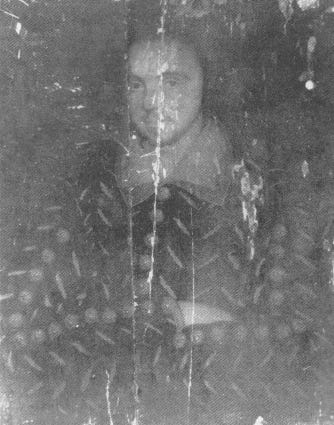


January 24
[edit]Some unknown vehicles
[edit]There are some vehicles from Turbo gum inserts which, amid their unhelpful captions, I couldn't identify neither with reverse search nor with AI. Any help is appreciated with these: possibly customized Range Rover, allegedly Rover Bravo prototype, alleged Audi S6, custom bike, alleged Bentley Bower phaeton 1950, possibly De Dion Bouton model, another bike, unclear Honda bike, some custom big-foot, alleged Daimler Millenium, alleged Aston Martin Concept, unclear Honda-McLaren, alleged Renault concept. Thanks. Brandmeister talk 13:57, 24 January 2026 (UTC)



- The 'McLaren Honda' listed is actually an CART Penske Honda being driven by Helio Castroneves, probably from the 2000 season. See for example this page with a picture of the same model/driver at the end of the article. I can see how they got confused: the F1 McLarens had a very similar livery. ~2026-52304-6 (talk) 20:42, 24 January 2026 (UTC)
- The De Dion Bouton is "Type K1", though this confusingly seems to exist in two different forms, only one of which looks like your gum insert picture. See commons:Category:De_Dion-Bouton_Type_K1 and supercars.net. It has 8 steam horses.
- For "Bower" read Blower. DuncanHill (talk) 11:02, 26 January 2026 (UTC)
- Re the different forms. In that era (pre-WW1) the car model or type often referred only to the engine and chassis. Although the manufacturer might supply a given model with one or more standard sets of bodywork, it was quite common for a purchaser (by definition well-off) to buy a vehicle without bodywork, and have their chosen coachbuilder make the bodywork to their personal specification. {The poster formerly known as 87.81.230.195} ~2025-31359-08 (talk) 15:07, 26 January 2026 (UTC)
- Thanks, clears something at least. Brandmeister talk 17:54, 26 January 2026 (UTC)
- I'm puzzled by the purpose of the open area at the front. It looks to be just a platform, with no seats and no protection, and the steering wheel isn't located there. Is it for cargo? Card Zero (talk) 00:44, 27 January 2026 (UTC)
- It's copying the shape of a Hansom cab, which had a platform like that between the horse (engine) and the enclosed cab. See picture here. DuncanHill (talk) 01:14, 27 January 2026 (UTC)
- Oh, it's a skeuomorph. The feature made sense on hansoms because a driver's seat blocked the back of the cab and the wheels were more than 4 foot diameter and blocked the sides and the single horse couldn't pull more than two passengers, all of which pushed the doors to the front with access via this little porch-platform. So it was just a walkway. Card Zero (talk) 02:32, 27 January 2026 (UTC)
- It's copying the shape of a Hansom cab, which had a platform like that between the horse (engine) and the enclosed cab. See picture here. DuncanHill (talk) 01:14, 27 January 2026 (UTC)
- Re the different forms. In that era (pre-WW1) the car model or type often referred only to the engine and chassis. Although the manufacturer might supply a given model with one or more standard sets of bodywork, it was quite common for a purchaser (by definition well-off) to buy a vehicle without bodywork, and have their chosen coachbuilder make the bodywork to their personal specification. {The poster formerly known as 87.81.230.195} ~2025-31359-08 (talk) 15:07, 26 January 2026 (UTC)
January 26
[edit]RPC
[edit]I was working on a Matt Gaffney crossword and the answer doesn't make sense to me. The clue was "Wedding invite enclosure, briefly" and the answer was RPC. What is RPC in this context? My first thought was that it was new version of RSVP, but that doesn't seem to the case. Just to be clear, RPC is definitely the answer; the game doesn't complete until every answer is correct, so this was not caused by me forcing in an incorrect word. Matt Deres (talk) 17:42, 26 January 2026 (UTC)
- It's talking about the programming term RPC - Remote Procedure Call and it's use of 'Envelope'. Part of RPC is the envelope which contains the message - see for example SOAP. Nanonic (talk) 17:51, 26 January 2026 (UTC)
- That seems extremely unlikely. What has that to do with wedding invitations? Matt Deres (talk) 20:49, 26 January 2026 (UTC)
- "wedding invite enclosure" = envelope. The thing you put the invite in. Nanonic (talk) 22:23, 26 January 2026 (UTC)
- An enclosure is that which is enclosed, not that which encloses. In the context of an envelope and a letter that is put in the envelope, it is something that is enclosed, together with the letter, in the envelope. ‑‑Lambiam 23:08, 26 January 2026 (UTC)
- It's both the thing enclosed, and the thing enclosing it. See OED which gives, amongst other meanings for Enclosure - "That wherewith something is enclosed", "An outer covering or case; an envelope", and "That which is enclosed", "A document or letter enclosed within the cover of another". But why a wedding invite? DuncanHill (talk) 23:28, 26 January 2026 (UTC)
- I'm sorry, but a general-audience crossword is not going to provide a clue like that in hopes of eliciting an extremely obscure piece of internet protocol jargon. Not to mention that what you suggested has nothing whatsoever to do with wedding invitations. Like, I get that there's a neat semantic link, but it only makes an iota of sense if you start with RPC and try to figure out how to make it connect somehow with wedding invitations. Matt Deres (talk) 14:10, 27 January 2026 (UTC)
- An enclosure is that which is enclosed, not that which encloses. In the context of an envelope and a letter that is put in the envelope, it is something that is enclosed, together with the letter, in the envelope. ‑‑Lambiam 23:08, 26 January 2026 (UTC)
- "wedding invite enclosure" = envelope. The thing you put the invite in. Nanonic (talk) 22:23, 26 January 2026 (UTC)
- That seems extremely unlikely. What has that to do with wedding invitations? Matt Deres (talk) 20:49, 26 January 2026 (UTC)
- "request the pleasure of your company" is one of the stereotypical bits of wording used in wedding invitations. So in that sense, it's a "wedding invite enclosure" and RPC is an abbreviation of it, hence "briefly". Adam Sampson (talk) 22:20, 27 January 2026 (UTC)
"Return post card" ? Like a SASE, but using less paper. DOR (ex-HK) (talk) 01:26, 28 January 2026 (UTC)
January 27
[edit]reporting
[edit]why is it so complicated to report a problematic article ? ive been searching for like half an hour now and im just being sent in circles around the "contact us" page. ~2026-58569-6 (talk) 11:50, 27 January 2026 (UTC)
- What's the problem and what's the article? DuncanHill (talk) 11:55, 27 January 2026 (UTC)
- Maybe Wikipedia doesn't work the way you think. You can't demand to see the manager, there isn't one. There's a process for proposing the deletion of an article, if that's what you want. But "problematic" how? If it's just about vandalism, you or I could undo the damage right now. Card Zero (talk) 12:03, 27 January 2026 (UTC)
- Or maybe it's just trolling. ←Baseball Bugs What's up, Doc? carrots→ 16:54, 27 January 2026 (UTC)
- Such questions are better raised at the Wikipedia:Teahouse, but first read the following because it may help you to formulate a question that can be answered. It is not clear to me what you seek to achieve by reporting the article. If the problem is fixable, then don't report it but just FIXIT. Or, if it is fixable but this is beyond your capabilities, you can flag the issues on the talk page of the article. Sometimes there is a WikiProject in the area covered by the problematic article where you can additionally flag the issues. There are also templates for signaling problems with an article in the article itself, such as {{clarify}} and {{citation needed}}; for a long list of cleanup templates see Wikipedia:Template index/Cleanup. And if the problem is so bad it cannot be fixed, you can nominate the article for deletion – but, please, before doing so, read our guide to deletion. ‑‑Lambiam 19:15, 27 January 2026 (UTC)