The northern voalavo (Voalavo gymnocaudus), also known as the naked-tailed voalavo or simply the voalavo, is a rodent in the family Nesomyidae found in the Northern Highlands of Madagascar. Discovered in 1994 and formally described in 1998, it is the type species of the genus Voalavo; its closest relative is the eastern voalavo of the Central Highlands. DNA sequencing suggests that it may be more closely related to Grandidier's tufted-tailed rat than to other species of the closely related genus Eliurus. The northern voalavo is found at 1,250 to 1,950 m (4,100 to 6,400 ft) above sea level in montane wet and dry forests in the Marojejy and Anjanaharibe-Sud massifs. Nocturnal and solitary, it lives mainly on the ground, but it can climb and probably eats plant matter. Despite having a small range, the species is classified as being of least concern because it lacks obvious threats and much of its range is within protected areas. (Full article...)
The grey-cowled wood rail or grey-necked wood rail (Aramides cajaneus) is a species of bird in the family Rallidae, the rails. It lives primarily in the forests, mangroves, and swamps of Central and South America. Of the two subspecies, A. c. avicenniae is found in southeastern Brazil, while the nominate is found throughout the portion of the range not occupied by the other subspecies. The species as a whole is usually found at elevations from sea level to 2,000 metres (6,600 ft), although some have been found above that. This bird's large extent of occurrence along with its population is why it is considered to be least-concern by the International Union for Conservation of Nature (IUCN). In some places, it is occasionally hunted and kept for food. (Full article...)
Styracosaurus (/stɪˌrækəˈsɔːrəs/sti-RAK-ə-SOR-əs; meaning "spiked lizard" from the Ancient Greekstyrax/στύραξ "spike at the butt-end of a spear-shaft" and sauros/σαῦρος "lizard") is an extinct genus of herbivorous dinosaur from the Late Cretaceous (Campanian stage) of North America. It had four to six long parietal spikes extending from its neck frill, a smaller jugal horn on each of its cheeks, and a single horn protruding from its nose, which may have been up to 60 centimeters (2 feet) long and 15 centimeters (6 inches) wide. The function or functions of the horns and frills have been debated for many years. (Full article...)
Image 6
The Guilden Morden boar
The Guilden Morden boar is a sixth- or seventh-century Anglo-Saxon copper alloy figure of a boar that may have once served as the crest of a helmet. It was found around 1864 or 1865 in a grave in Guilden Morden, a village in the eastern English county of Cambridgeshire. There the boar attended a skeleton with other objects, including a small earthenware bead with an incised pattern, although the boar is all that now remains. Herbert George Fordham, whose father originally discovered the boar, donated it to the British Museum in 1904; as of 2018 it was on view in room 41. (Full article...)
The Acra (also spelled Akra, from Ancient Greek: Ἄκρα, Hebrew: חקרא ,חקרהḤaqra(h)), with the meaning of "stronghold" (see under "Etymology"), was a place in Jerusalem thought to have had a fortified compound built by Antiochus Epiphanes, ruler of the Seleucid Empire, following his sack of the city in 168 BCE. The name Acra was also used at a later time for a city quarter probably associated with the by-then destroyed fortress, known in his time to Josephus (1st century CE) as both Acra and "the lower city". The fortress played a significant role in the events surrounding the Maccabean Revolt, which resulted in the formation of the Hasmonean Kingdom. The "upper city" was captured by Judas Maccabeus, with the Seleucid garrison taking refuge in the "Acra" below, and the task of destroying this last enemy stronghold inside Jerusalem fell to Simon Maccabeus surnamed Thassi. Knowledge about the Acra is based almost exclusively on the writings of Josephus, which are of a later date, and on the First and Second Books of Maccabees, which were written not long after the described events. (Full article...)
Image 8
Artist's illustration showing the life of a massive star: Nuclear fusion converts lighter elements into heavier ones; when fusion no longer generates enough pressure to counteract gravity, the star collapses into a black hole. During this collapse, energy may be released as a momentary burst of gamma-rays aligned to the axis of rotation.
In gamma-ray astronomy, gamma-ray bursts (GRBs) are extremely energetic events occurring in distant galaxies which represent the brightest and most powerful class of explosion in the Universe. These extreme electromagnetic emissions are second only to the Big Bang as the most energetic and luminous phenomena known. Gamma-ray bursts can last from a few milliseconds to several hours. After the initial flash of gamma rays, a longer-lived afterglow is emitted, usually in the longer wavelengths of X-ray, ultraviolet, optical, infrared, microwave or radio frequencies. (Full article...)
Andromeda is one of the 48 constellations listed by the 2nd-century Greco-Roman astronomer Ptolemy, and one of the 88 modern constellations. Located in the northern celestial hemisphere, it is named for Andromeda, daughter of Cassiopeia, in the Greek myth, who was chained to a rock to be eaten by the sea monster Cetus. Andromeda is most prominent during autumn evenings in the Northern Hemisphere, along with several other constellations named for characters in the Perseus myth. Because of its northern declination, Andromeda is visible only north of 40° south latitude; for observers farther south, it always lies below the horizon. It is one of the largest constellations, with an area of 722 square degrees. This is over 1,400 times the size of the full moon, 55% of the size of the largest constellation, Hydra, and over 10 times the size of the smallest constellation, Crux. (Full article...)
Image 11
Diagram showing known remains
Segnosaurus is a genus of therizinosauriddinosaur that lived in what is now southeastern Mongolia during the Late Cretaceous, about 102–86 million years ago. Multiple incomplete but well-preserved specimens were discovered in the Gobi Desert in the 1970s, and in 1979 the genus and species Segnosaurus galbinensis were named. The generic name Segnosaurus means "slow lizard" and the specific name galbinensis refers to the Galbin region. The known material of this dinosaur includes the lower jaw, neck and tail vertebrae, the pelvis, shoulder girdle, and limb bones. Parts of the specimens have gone missing or become damaged since they were collected. Remains from Japan originally assigned to Allosaurus were reassigned to Segnosaurussp. (of unspecified species) in 2025. (Full article...)
Image 12
The mummy as exhibited in the Senckenberg Museum, showing the top and left side of the body The Edmontosaurus mummy SMF R 4036, nicknamed the Senckenberg mummy or Edmond, is an exceptionally well-preserved dinosaur fossil in the collection of the Senckenberg Museum (SMF) in Frankfurt am Main, Germany. It was found in 1910 in Wyoming, United States, in rocks of the Lance Formation that date to the late Maastrichtian, close to the Cretaceous–Paleogene extinction event 66million years ago. The mummy is ascribed to the species Edmontosaurus annectens (originally Trachodon), a member of the Hadrosauridae ("duck-billed dinosaurs"). It comprises a nearly complete skeleton that was found wrapped in skin impressions, a rare case of preservation for which the term dinosaur mummy has been used. The fingers of the right hand are wrapped in a mitten-like envelope of skin impressions, initially interpreted as a paddle unsuited for terrestrial locomotion, thereby reinforcing the now outdated hypothesis that hadrosaurs were aquatic. The impression of a horny beak is also preserved with this specimen. Plant remains found in the body cavity were interpreted as stomach contents, indicating a diet of terrestrial plants. It is now believed that this plant material was washed into the body cavity of the carcass. (Full article...)
Isoseismal map for the event (I–III are Not felt to Weak, IV is Light, V is Moderate, VI is Strong, VII is Very strong)
The U.S. Midwestern state of Illinois was struck by its largest recorded earthquake (a New Madrid event) in 1968. Striking at 11:02 a.m. on November 9, it measured 5.3 on the Richter scale. Although no fatalities occurred, the event caused considerable structural damage to buildings, including the toppling of chimneys and shaking in Chicago, the region's largest city. The earthquake was one of the most widely felt in U.S. history, largely affecting 23 states over an area of 580,000 sq mi (1,500,000 km2). In studying its cause, scientists discovered the Cottage Grove Fault in the Southern Illinois Basin. (Full article...)
... that Flyover, a 2023 science fiction novel by an American author, portraying a dystopian future where part of the US becomes a theocracy, was published in French but not in English?
This portal needs to be updated. Please help update this portal to reflect recent events or newly available information. Relevant discussion may be found on the talk page.
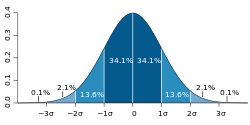
Many naturally occurring phenomena approximate a normal distribution.
Complete requests of other editors on the talk pages of science-related articles (examples)
Expand 2026 in science and/or other articles for science-related topics of the year (in the box on the right)
Create new articles for items of this article, mostly articles relating to new scientific fields/topics/findings (the page does not use redlinks anymore but you will quickly identify possible new articles when reading it; here you can find a version with over 60 redlinked examples)
Some of the lists' items have not yet been integrated into their wikilinked articles; if you add a study there it should also be relevant to at least one other article
Find studies published under a compatible open license (like CC BY 4.0) and upload the studies' images with descriptions from the study and add these images to articles if they are relevant and useful there
When a study with a useful image is published under an incompatible or unclear license (or the image is published not in a study but elsewhere), you could contact its authors (Twitter/Mail) and ask them to give you the permission to upload them under CC BY 4.0 (or whether they could upload the image/s under a compatible license)
You can also think about whether images would be useful as you read a science-related article and then search for such images:
if they already exist add them (if already on WMCommons) or upload them (if the license is ok) or ask their authors for permissions
A plot of normal distribution (or bell-shaped curve) where each band has a width of 1 standard deviation – See also: 68–95–99.7 rule. In statistics, the standard deviation is a measure of the amount of variation of the values of a variable about its mean. A low standard deviation indicates that the values tend to be close to the mean (also called the expected value) of the set, while a high standard deviation indicates that the values are spread out over a wider range. Standard deviation may be abbreviated SD or std dev, and is most commonly represented in mathematical texts and equations by the lowercase Greek letterσ (sigma), for the population standard deviation, or the Latin letters, for the sample standard deviation. (Full article...)
Mickey Mouse, an anthropomorphic mouse and an American cartoon character co-created in 1928 by Walt Disney and Ub Iwerks Anthropomorphism (from the Greek words "ánthrōpos" (ἄνθρωπος), meaning "human," and "morphē" (μορφή), meaning "form" or "shape") is the attribution of human form, character, or attributes to non-human entities. It is considered to be an innate tendency of human psychology. Personification is the related attribution of human form and characteristics to abstract concepts such as nations, emotions, and natural forces, such as seasons and weather. Both have ancient roots as storytelling and artistic devices, and most cultures have traditional fables with anthropomorphized animals as characters. People have also routinely attributed human emotions and behavioral traits to wild as well as domesticated animals. (Full article...)
Sci-Hub is a shadow library that provides free access to millions of research papers, regardless of copyright, by bypassing publishers' paywalls in various ways. Unlike Library Genesis, it does not provide access to books. Sci-Hub was founded in Kazakhstan by Alexandra Elbakyan in 2011, in response to the rising costs of research papers behind paywalls. The site is extensively used worldwide. In September 2019, the site's operator(s) said that it served approximately 400,000 requests per day. In addition to its intensive use, Sci-Hub stands out among other shadow libraries because of its easy use/reliability and because of the enormous size of its collection; a 2018 study estimated that Sci-Hub provided access to most of the scholarly publications with issued DOI numbers. On 15 July 2022, Sci-Hub reported that its collection comprised 88,343,822 files. Since December 2020, the site has paused uploads due to legal troubles. (Full article...)
Image 9
An Airbus A321neo of Wizz Air, the largest operator of the type
In biology, taxonomy (from Ancient Greekτάξις (taxis)'arrangement' and -νομία (-nomia)'method') is the scientific study of naming, defining (circumscribing) and classifying groups of biological organisms based on shared characteristics. Organisms are grouped into taxa (singular: taxon), and these groups are given a taxonomic rank; groups of a given rank can be aggregated to form a more inclusive group of higher rank, thus creating a taxonomic hierarchy. The principal ranks in modern use are domain, kingdom, phylum (division is sometimes used in botany in place of phylum), class, order, family, genus, and species. The Swedish botanist Carl Linnaeus is regarded as the founder of the current system of taxonomy, having developed a ranked system known as Linnaean taxonomy for categorizing organisms. (Full article...)


 Featured articles are displayed here, which represent some of the best content on English Wikipedia.


_(14636758294).jpg)


 Translational motion at Thermodynamic temperature, by Greg L (from Wikipedia:Featured pictures/Sciences/Others)

 Vibrating glass beam at Euler–Bernoulli beam theory, by Ben pcc (from Wikipedia:Featured pictures/Sciences/Others)
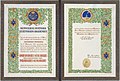 Nobel Prize in Physics diploma, by Sofia Gisberg (restored by Jebulon) (from Wikipedia:Featured pictures/Sciences/Others)
 Peruvian Andes at United States Exploring Expedition, by Alfred Thomas Agate (edited by Durova) (from Wikipedia:Featured pictures/Sciences/Others)
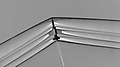
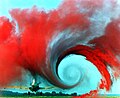 NASA study on wingtip vortices at Wake turbulence, by Langley Research Center (edited by Fir0002) (from Wikipedia:Featured pictures/Sciences/Others)
 Color cathodoluminescence of a diamond, by Pavel.Somov (from Wikipedia:Featured pictures/Sciences/Others)
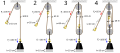 Mechanical advantage device, by Prolineserver (edited by Tomia, Ss181292 and Atropos235) (from Wikipedia:Featured pictures/Sciences/Others)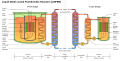
 Animation of a water drop, by Chris 73 and Gmaxwell (from Wikipedia:Featured pictures/Sciences/Others)
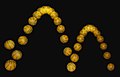 Projectile motion of a bouncing ball at Inelastic collision, by MichaelMaggs (from Wikipedia:Featured pictures/Sciences/Others)
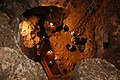 Archaeologists prospecting Santa Ana Cave at Excavation (archaeology), by Mario modesto (from Wikipedia:Featured pictures/Sciences/Others)
 Parallax, by Mila Zinkova (edited by Richard Bartz) (from Wikipedia:Featured pictures/Sciences/Others)

 Simulation of liquids with different viscosities, by Synapticrelay (from Wikipedia:Featured pictures/Sciences/Others)
 Section of the Large Hadron Collider, by Maximilien Brice (from Wikipedia:Featured pictures/Sciences/Others)
 Toroid magnets of the ATLAS detector, by Maximilien Brice, CERN (edited by Bammesk) (from Wikipedia:Featured pictures/Sciences/Others)

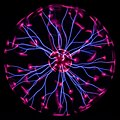


 Drop impact on a liquid surface, by José Manuel Suárez (from Wikipedia:Featured pictures/Sciences/Others)
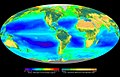 Global oceanic and terrestrial photoautotroph abundance at Primary production, by SeaWiFS Project (from Wikipedia:Featured pictures/Sciences/Others)
 Archaeological excavation at Atapuerca Mountains, by Mario modesto (from Wikipedia:Featured pictures/Sciences/Others)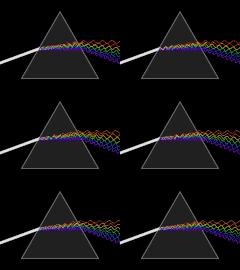



_-_Climate_Lab_Book_(Ed_Hawkins).png)


.png)


.jpg)


 Vital articles to understand Science.




.svg)
.svg)

.svg)

.jpg)


